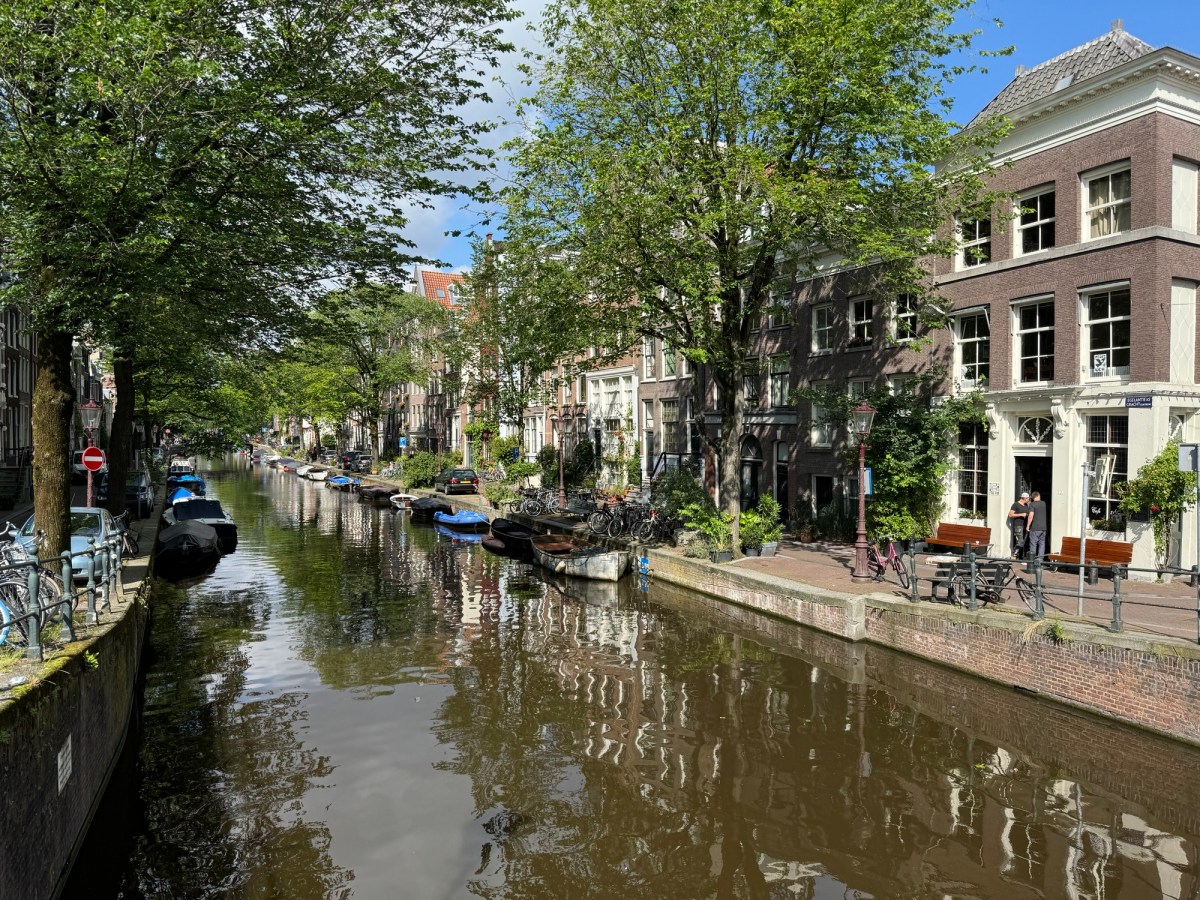
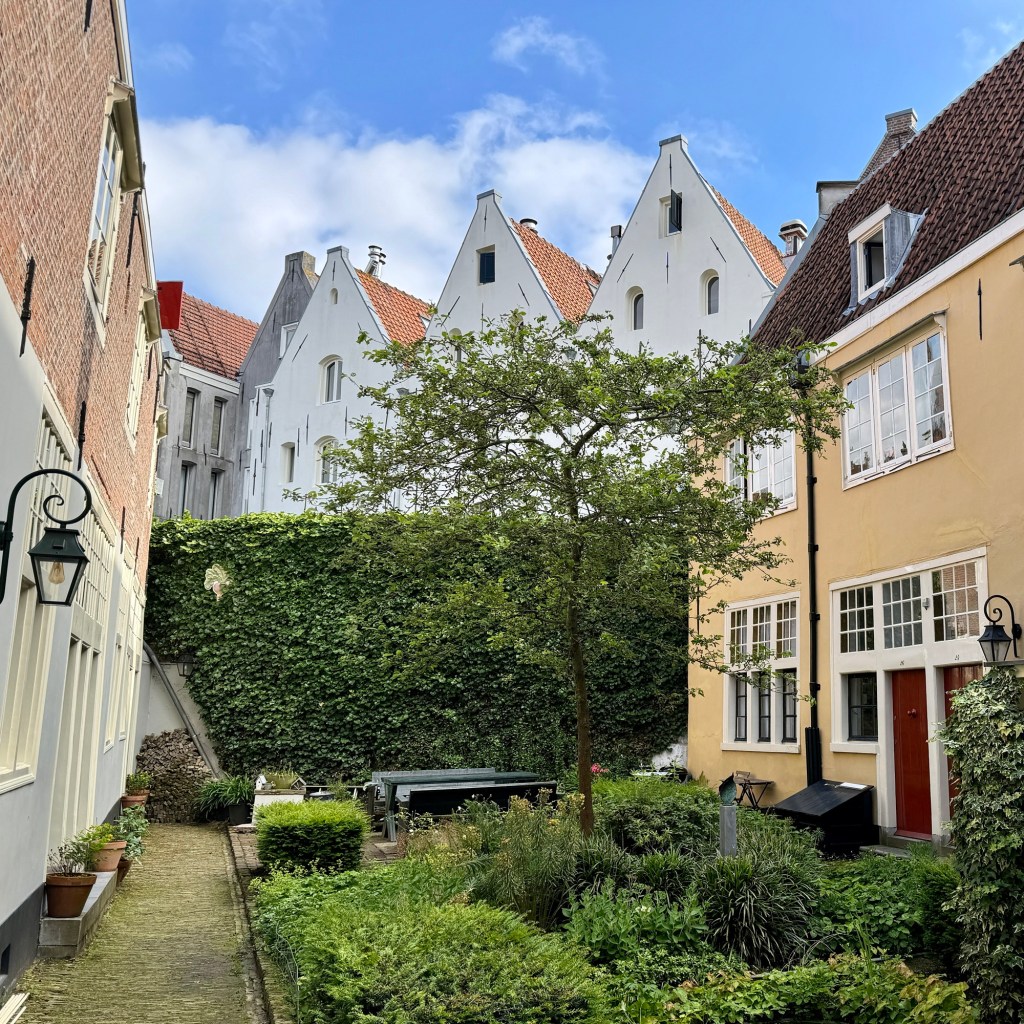
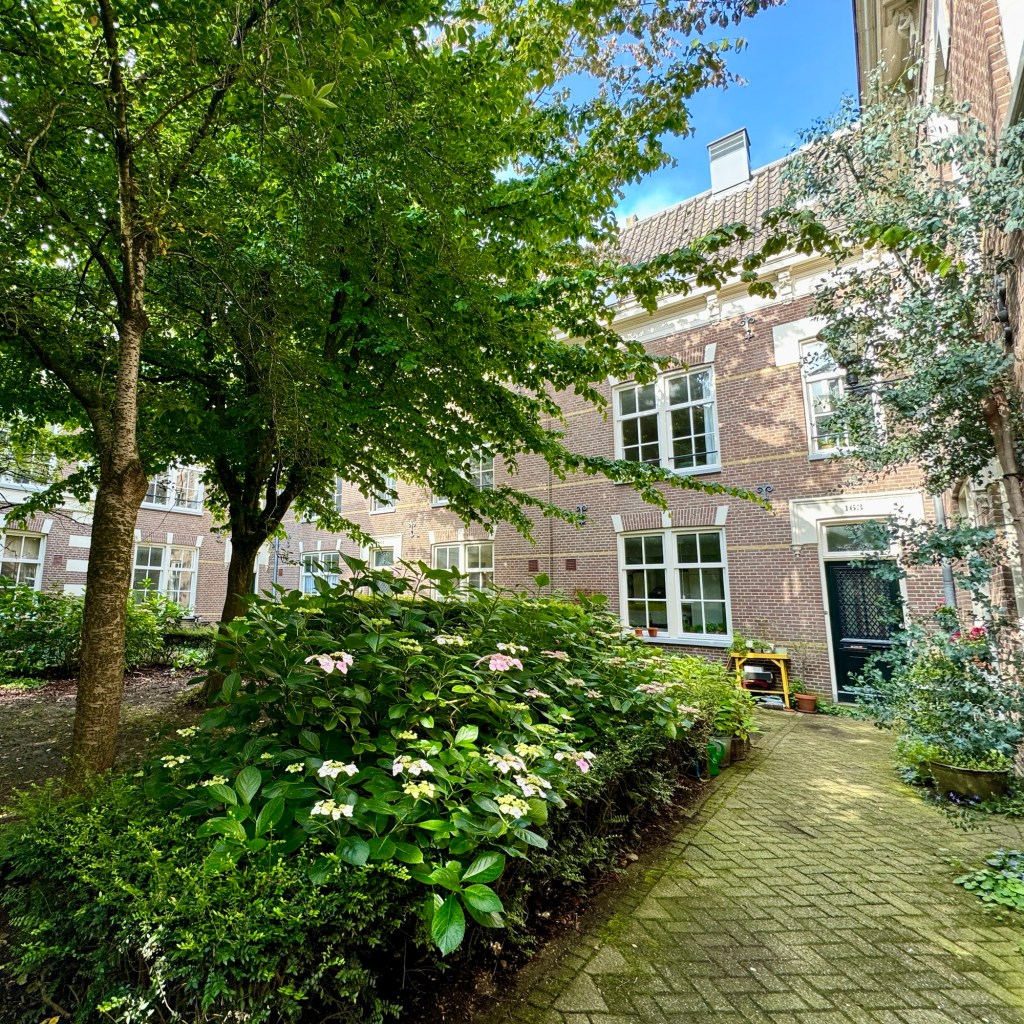
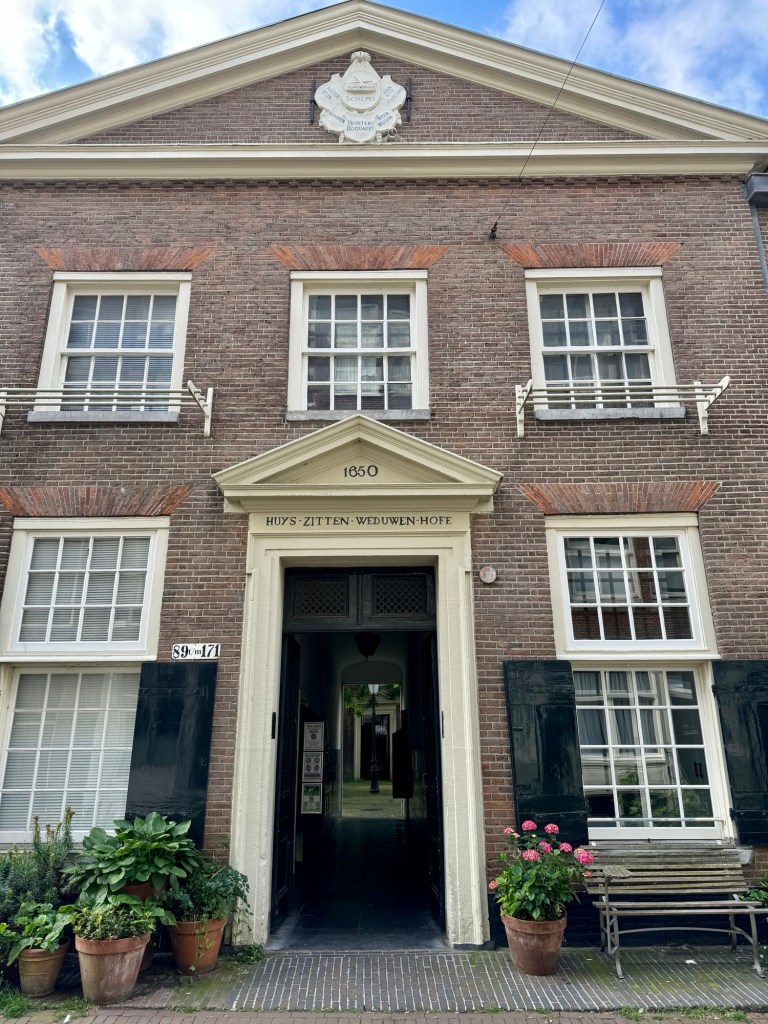
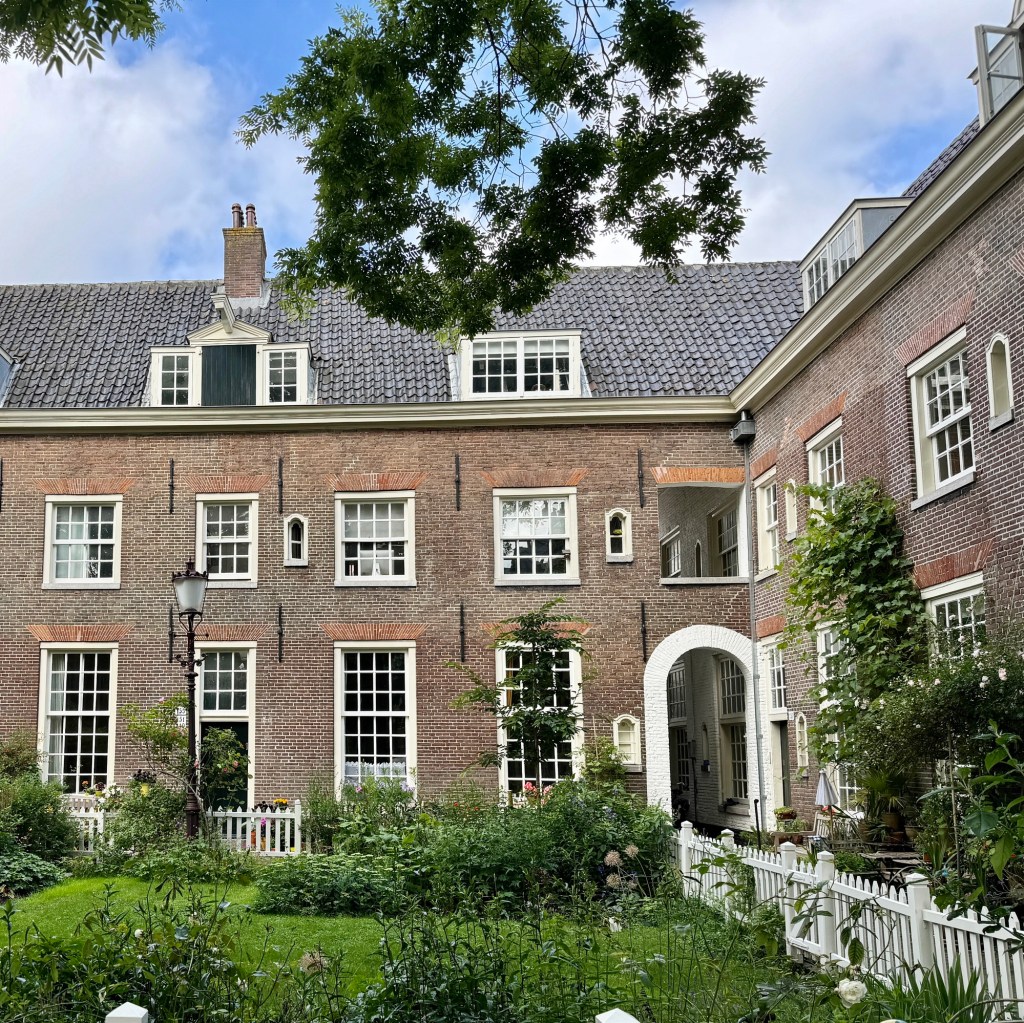
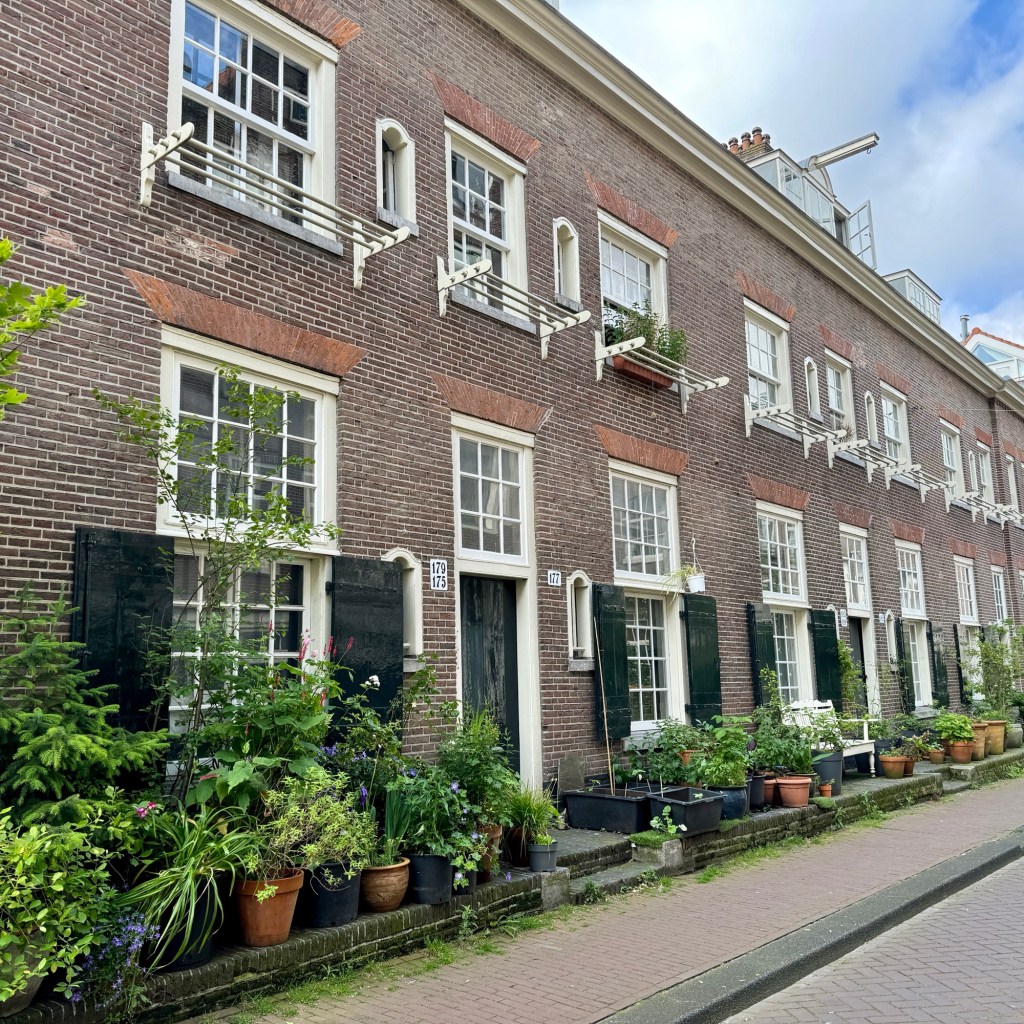
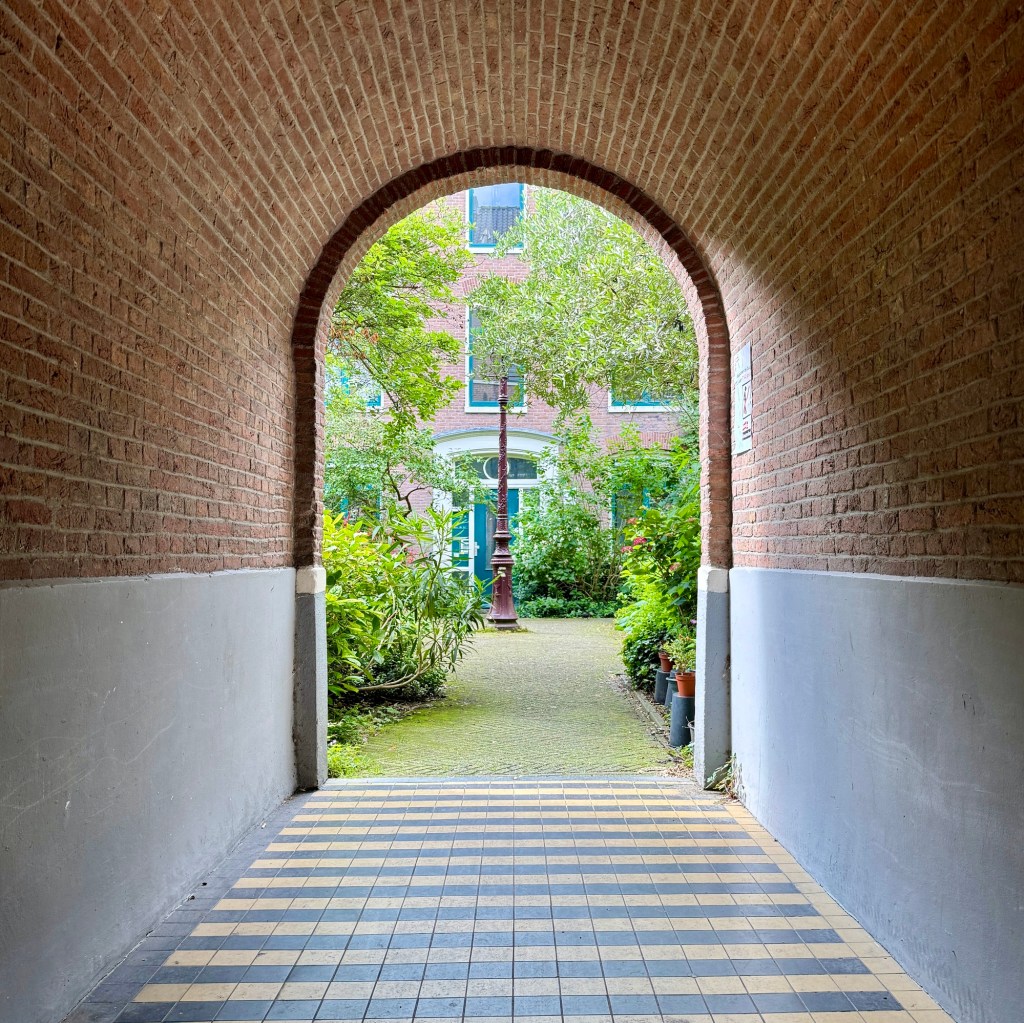
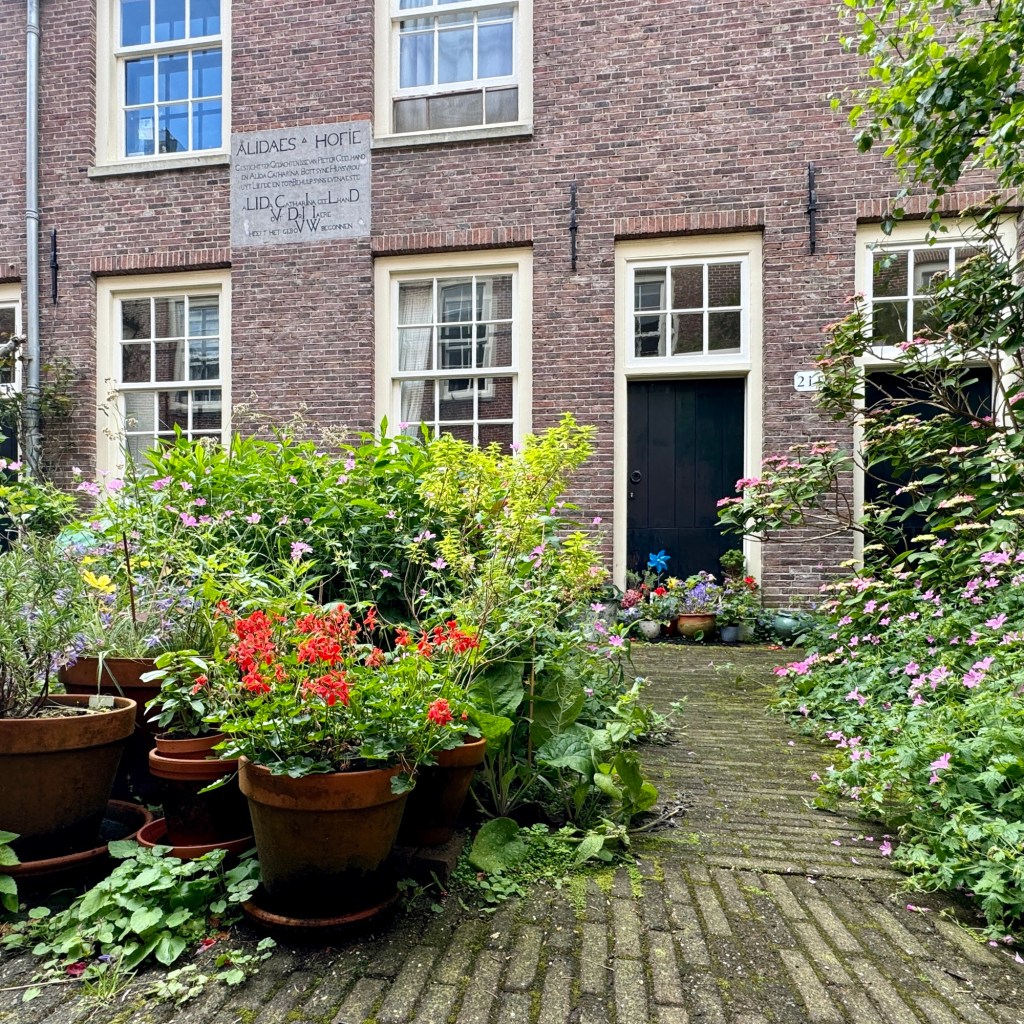
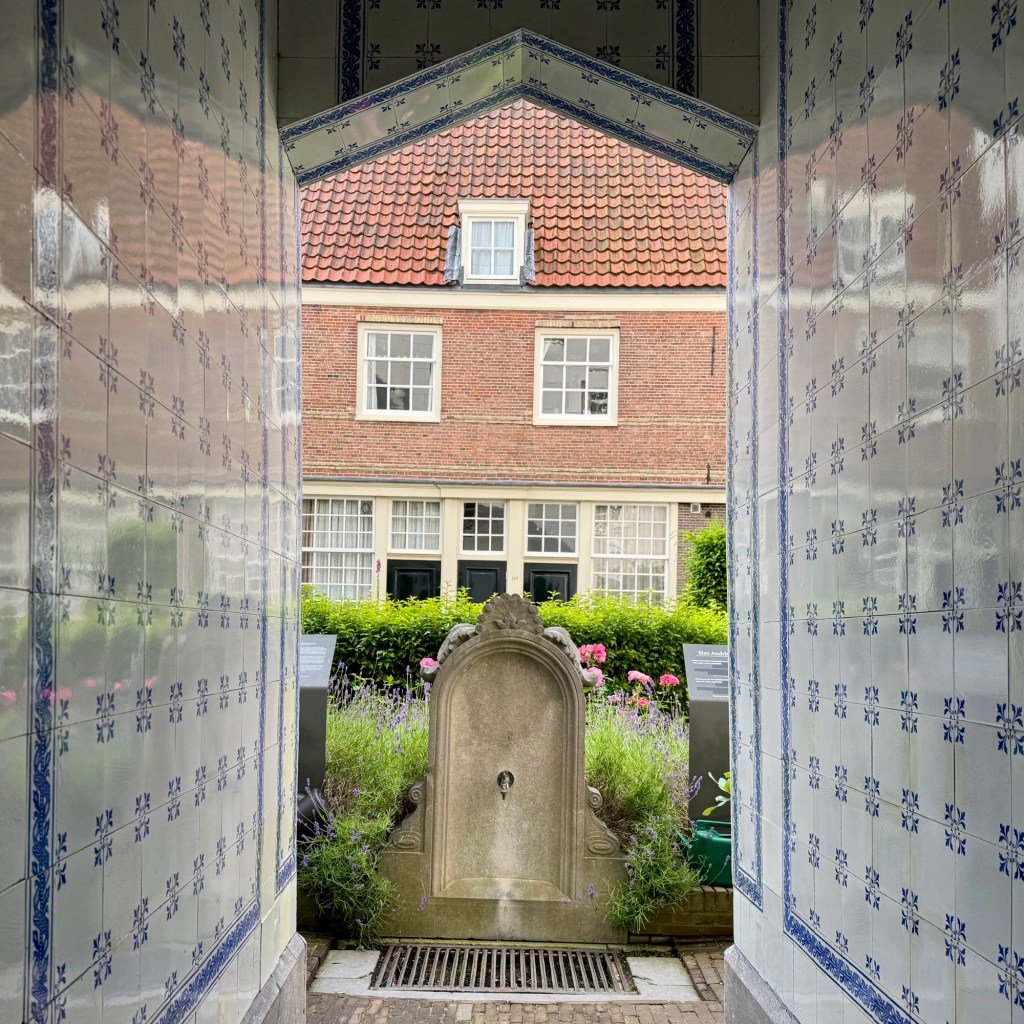
On my way to work earlier this week, I explored another side of Amsterdam: the hofjes. Hofjes are houses around a courtyard that is accessible from the street through a door and a hallway. Today, the courtyard is often a green space with trees and flowers. It used to be the place for communal services like water (in many hofjes you can still see the pumps) and toilets.
Hofjes have a long history in the Netherlands. The eldest were founded in the 12th or 13th century as a philanthropic act of wealthy citizens for widows or elderly men. Some hofjes have a religious origin, as intentional communities of laypeople such as the Beguines. In the 19th century another type of hofje was built: housing for people who had come to the city to look for work. These were sometimes maintained by slumlords who profited from the rule that for housing built off the street no permit was needed.
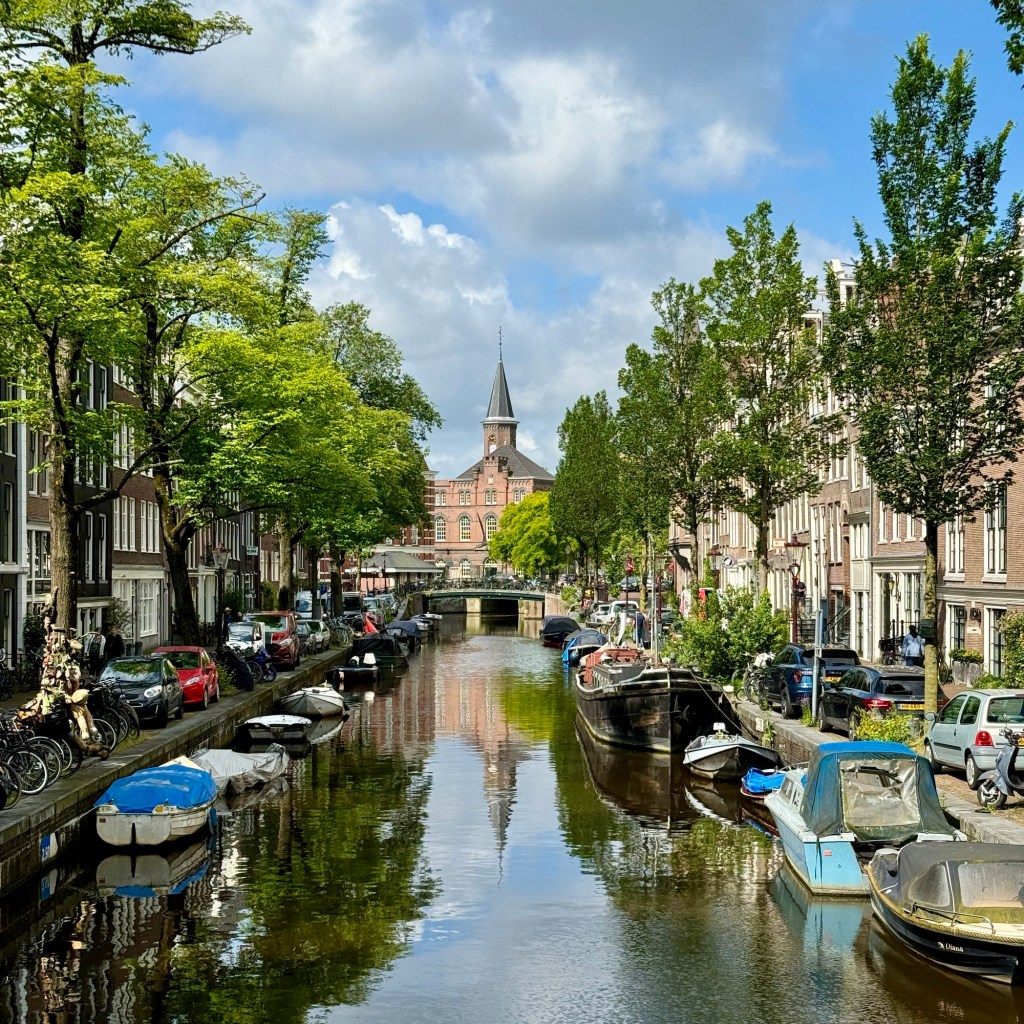
My walk took me to more than 10 hofjes in the Jordaan quarter of Amsterdam. I enjoyed the green, quiet spaces in the bustling city!
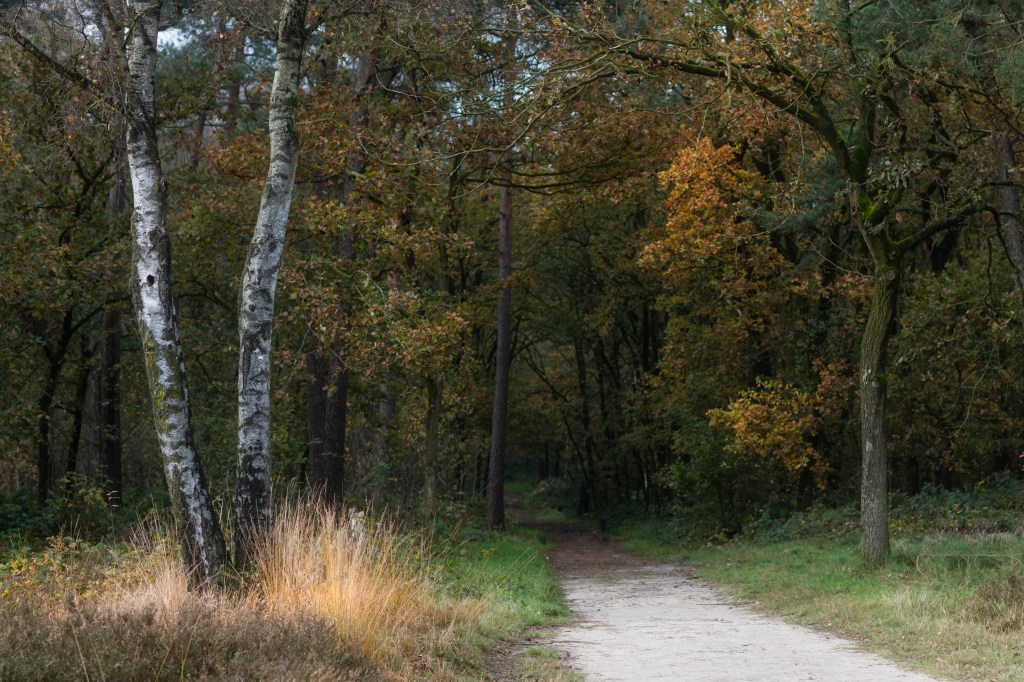
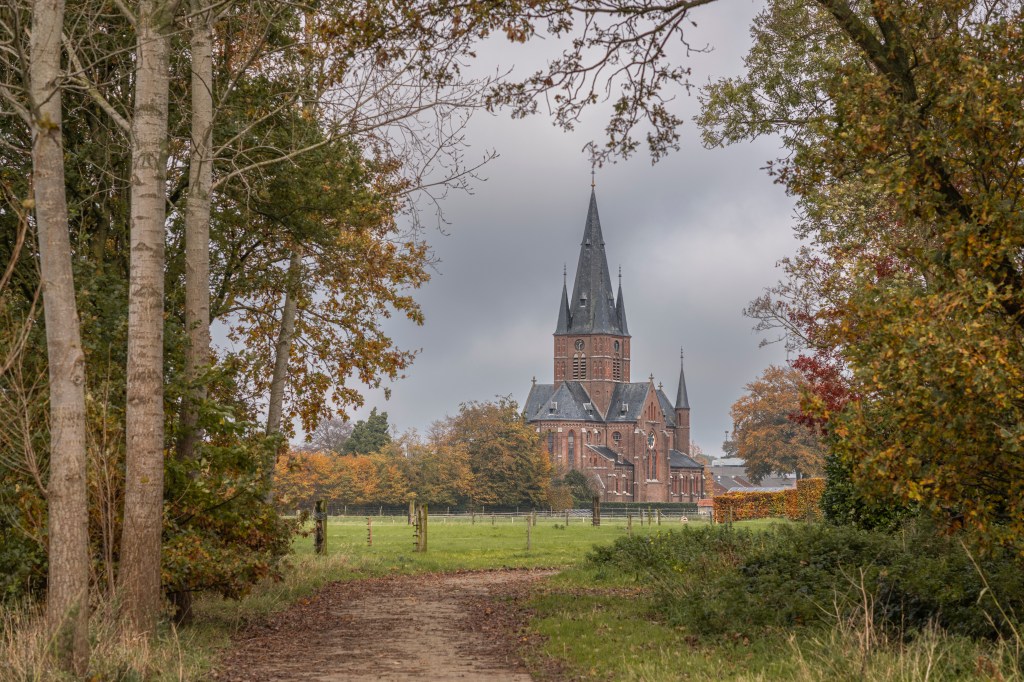
My Walk of Wisdom journey is almost coming to an end. Since Hermen gave me the starter pack for my birthday in February, we have been walking through the countryside around Nijmegen. The past weeks we have been busy and the weather was rainy, but Sunday promised to be dry. So after Hermen’s church service we set out to hike the trail from Wijchen to Afferden – about 18 km. We fortunately made it before dark!
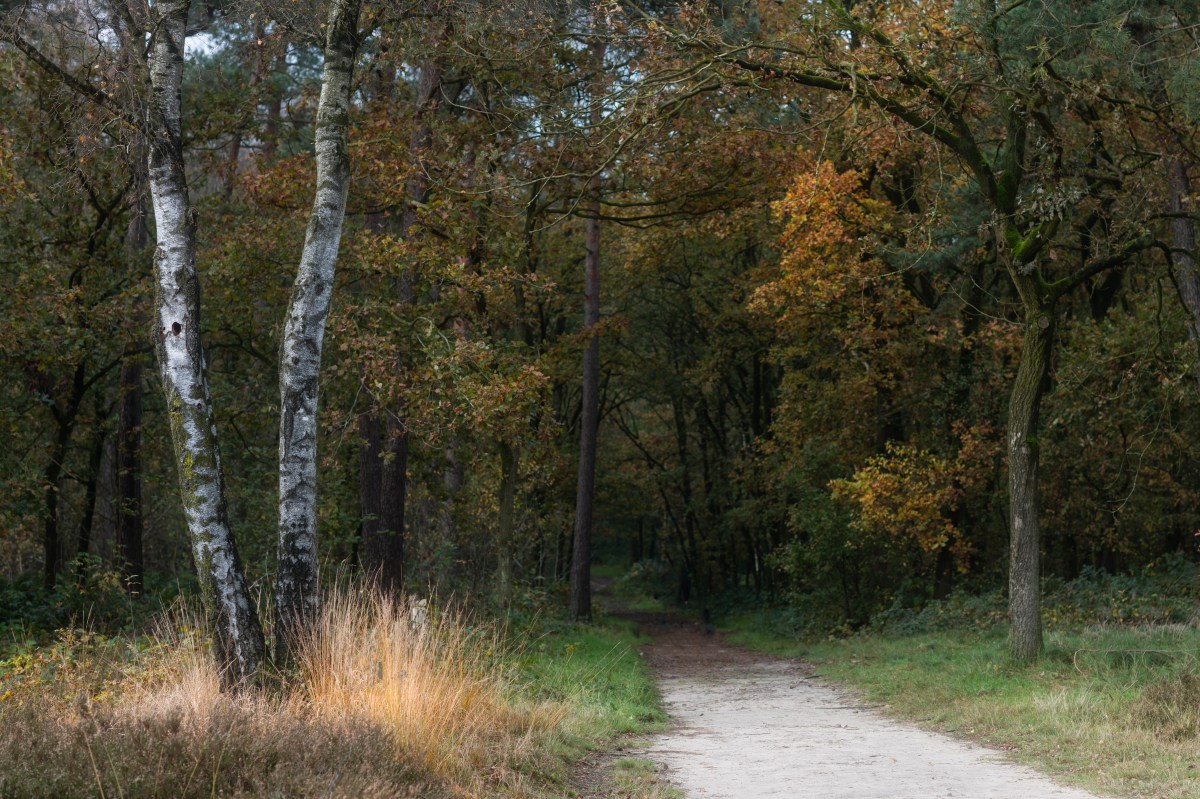
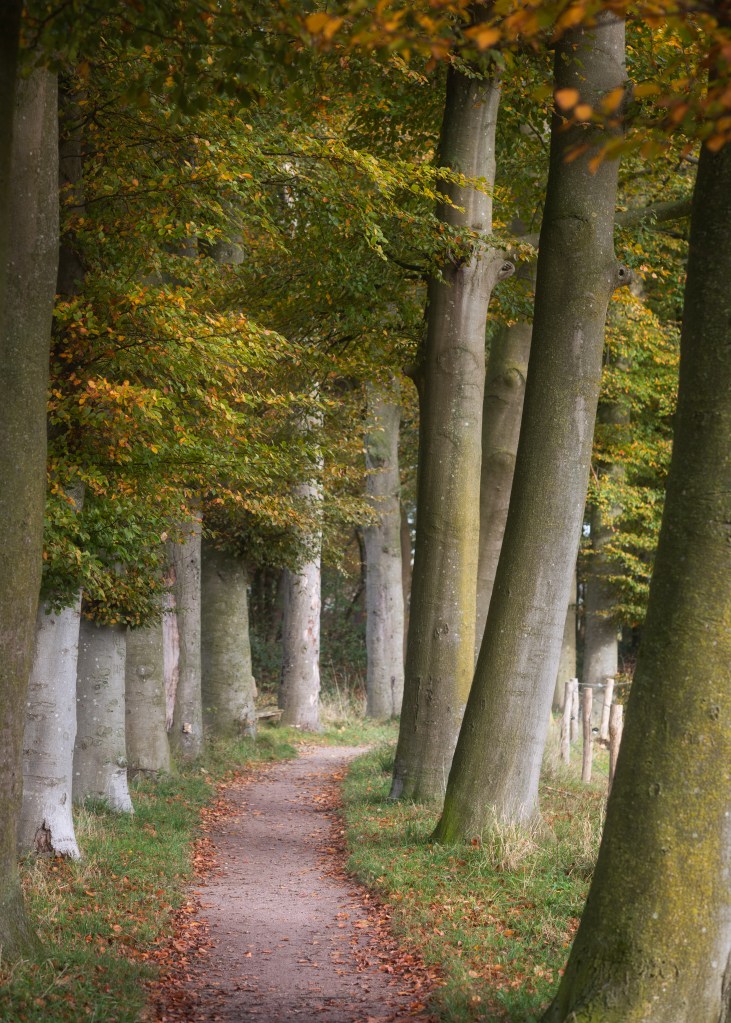
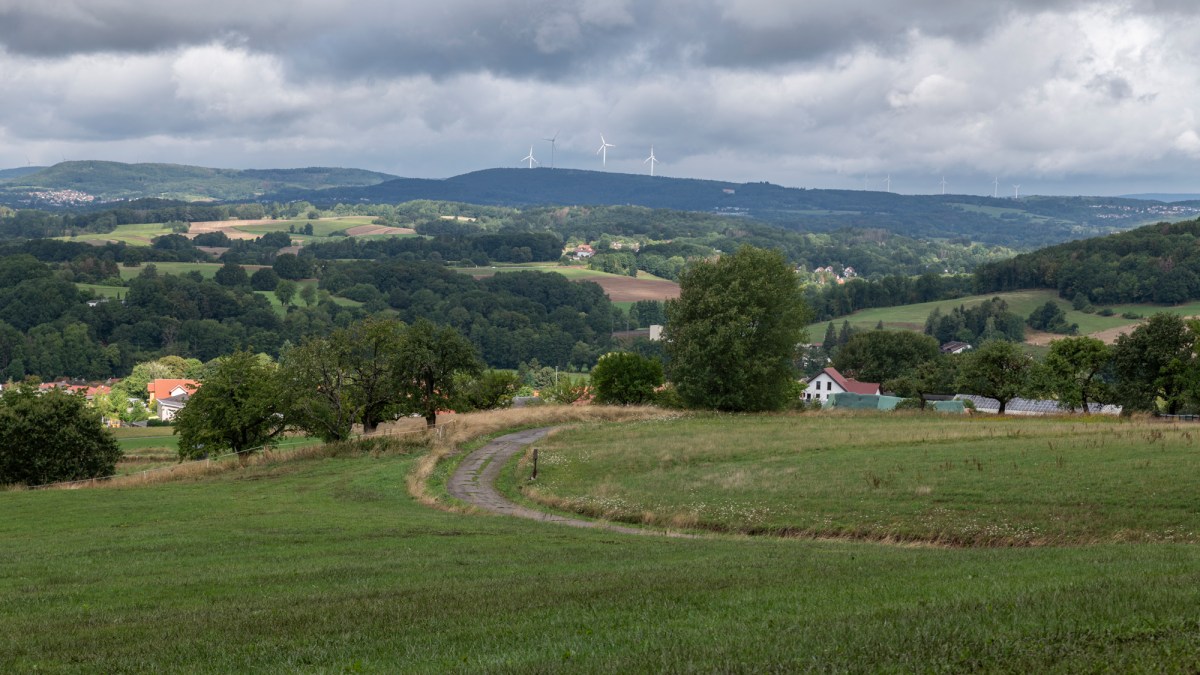
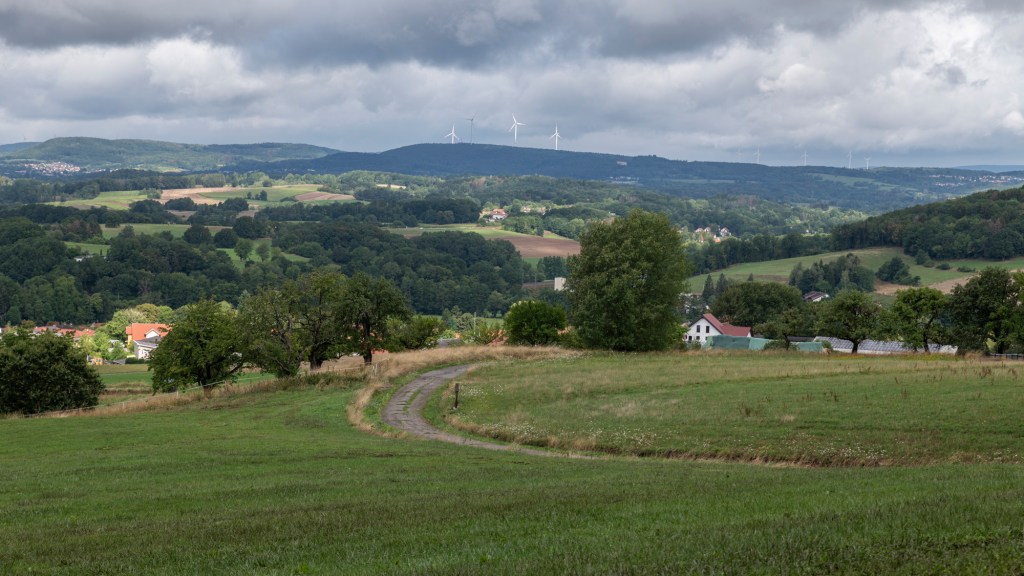
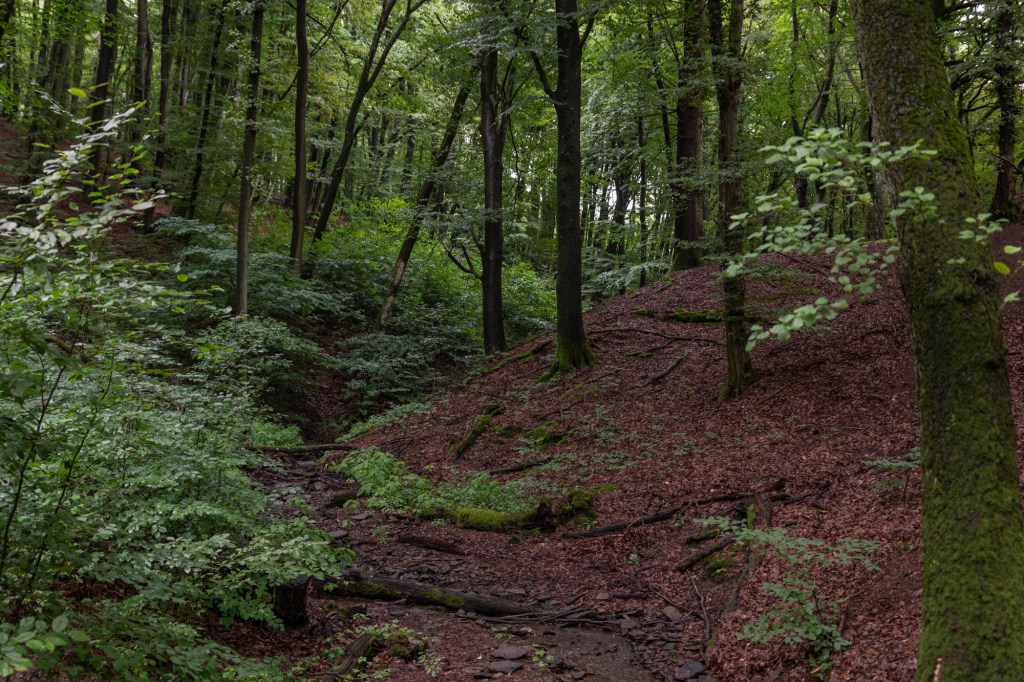
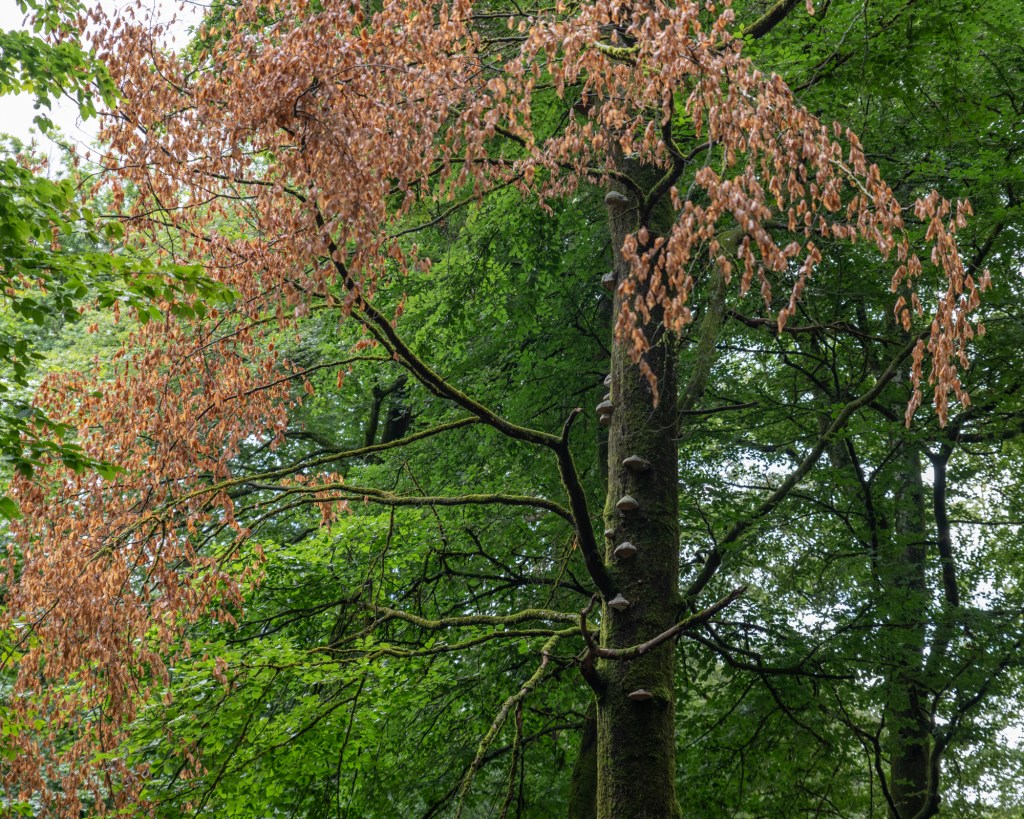
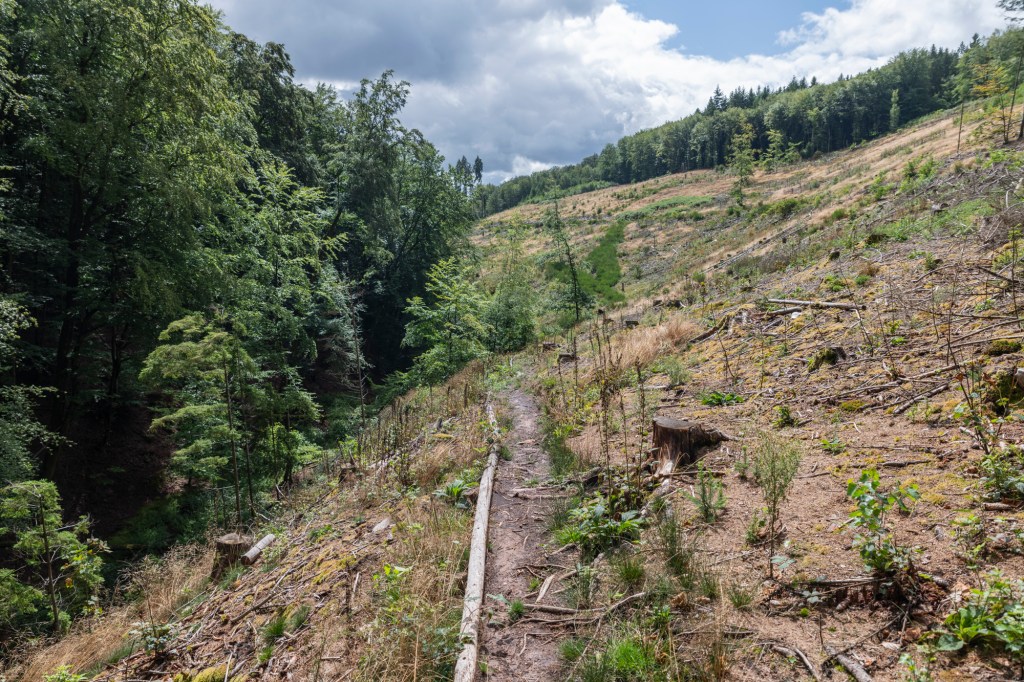
With the weather so rainy, we had to carefully plan our hikes. This day, rain was expected throughout, but with some dry spots between 10 and 12. So it would have to be a shorter walk! We chose a hike near the village of Sankt Wendel. Through beautiful beech forests and pretty gulches we explored the environment of St. Wendelinus, a (maybe) Irish monk who lived in this area in the 6th and 7th century.
According to the legend, he was on his way back home from a pilgrimage to Rome when he asked to spend the night at a farm near the city of Trier. The farmer was unfriendly: “Why is a healthy young man like you begging for a place to stay and food with it? You better work for it!” So Wendelinus set out herding the farmer’s pigs, and later his cows, and finally the sheep. To his regret, it left him little time to pray. The farmer was impressed by Wendelinus’ faith and gave him a place where he could live as a hermit and devote himself to prayer. People from the vicinity came to Wendelinus for guidance in their day-to-day lives, especially when they had problems with thier livestock – according to one theory Wendelinus had received an education in Ireland, where the knowledge of the druids was taught in monastic schools. After living as a hermit for a number of years, he was asked to become the abbot of a nearby monastery.
We had lunch at the Wendelinushof, a farm named after St. Wendelinus, and visited Sankt Wendel, where the saint was buried. Actually, the monks in the monastery tried to bury him there, but they kept finding the body next to the grave. So they put it on an ox cart and decided to bury Wendelinus where the oxen would stop. This place later grew to be the town of Sankt Wendel.
Wendelinus’ story is interesting. Faith pays only a very minor role in it. Yes, he wants to pray and gets the opportunity to do so as a hermit. But the farmer and the other people from the neighborhood do not seem to be looking for a religious leader. The farmer seems to have a kind of vicarious religion: how good that you are such a faithful person – I’ll facilitate your religious life. The people who come to visit Wendelinus do so to get advice, especially on how to cure their animals and ensure their fertility. Wendelinus is an expert, an expert in faith even, in a time in which religion seems to be a business for experts only.






 Awesome wonder