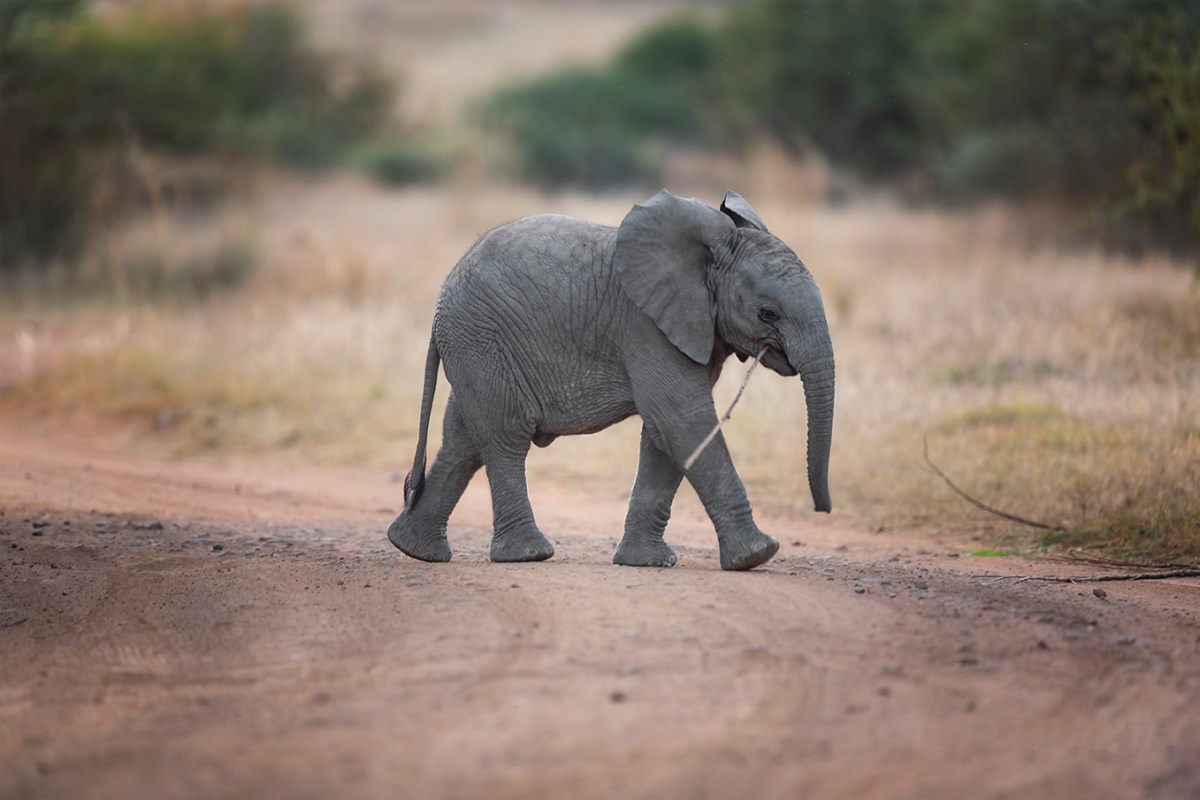
A small baby elephant crosses the road, chewing on a stick. Maybe his teeth are coming through? Actually, elephants are born with four small molars, which they will lose when they are about two years old. Unlike humans, who have milk teeth first and then change to their final set of teeth, elephants change their teeth troughout live. A long-living elephant goes through six sets of molars that replace the teeth that become worn out by chewing grasses and trees. The loss of their final set of teeth is a major cause of death among aged elephants.
Category: wildlife
Young cheetah

A young cheetah looks back over its shoulder. Cheetahs are weaned at the age of six months, but usually stay with their mother for some time after that. After 17 to 20 months, the mother can have another litter, so that often marks the end of the time of the youngster with the mother. Although young cheetahs from as young as six months go after hares or young antilopes, they often are only able to bring down a kill on their own when they’re 15 months or older. The odds for cheetah cubs to survive into adulthood are not so good. Lions are major predators of juveniles. This particular young cheetah was left to fend for itself for just one day when it was killed by predators…
What’s up folks?

A group of impalas all looking in the same direction. We do too. Every now and then one snorts. We try to see what they are seeing, hearing or smelling. Then they all turn and run away. Something must have been there … but unfortunately in the thick bush we were unable to find out what. Another “invisible leopard” sighting…
Tree squirrel
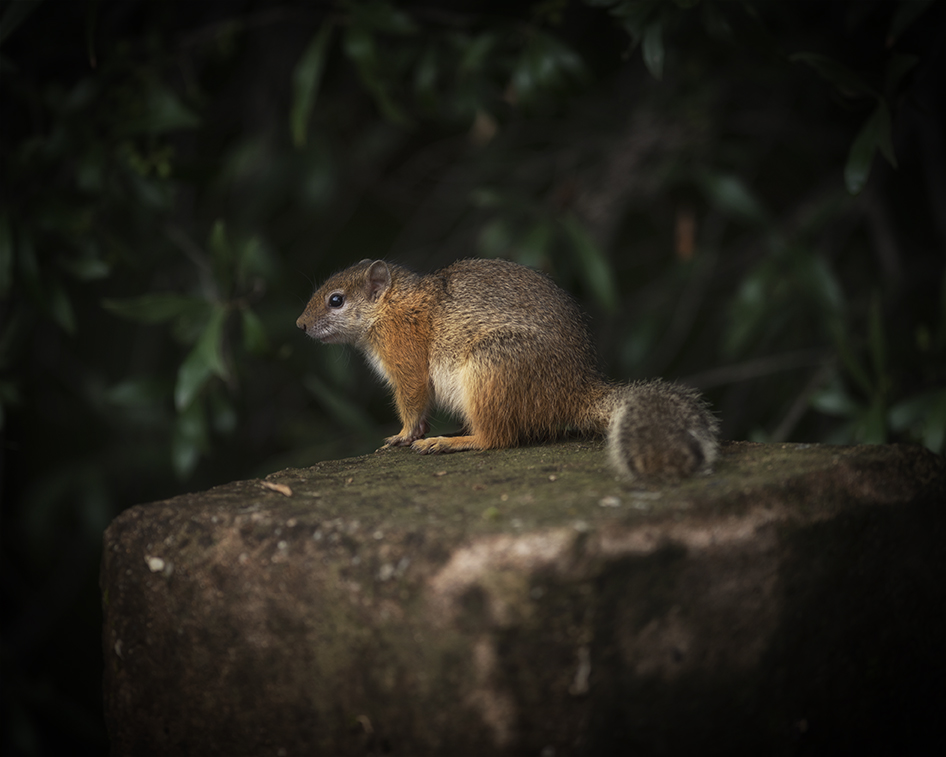
Safari guides are generally not very impressed if we spot a tree squirrel. But we happen to like these cute animals. So even though we had hoped to find a leopard hiding under this bridge, we were happy to see the squirrel instead!
Looking back…
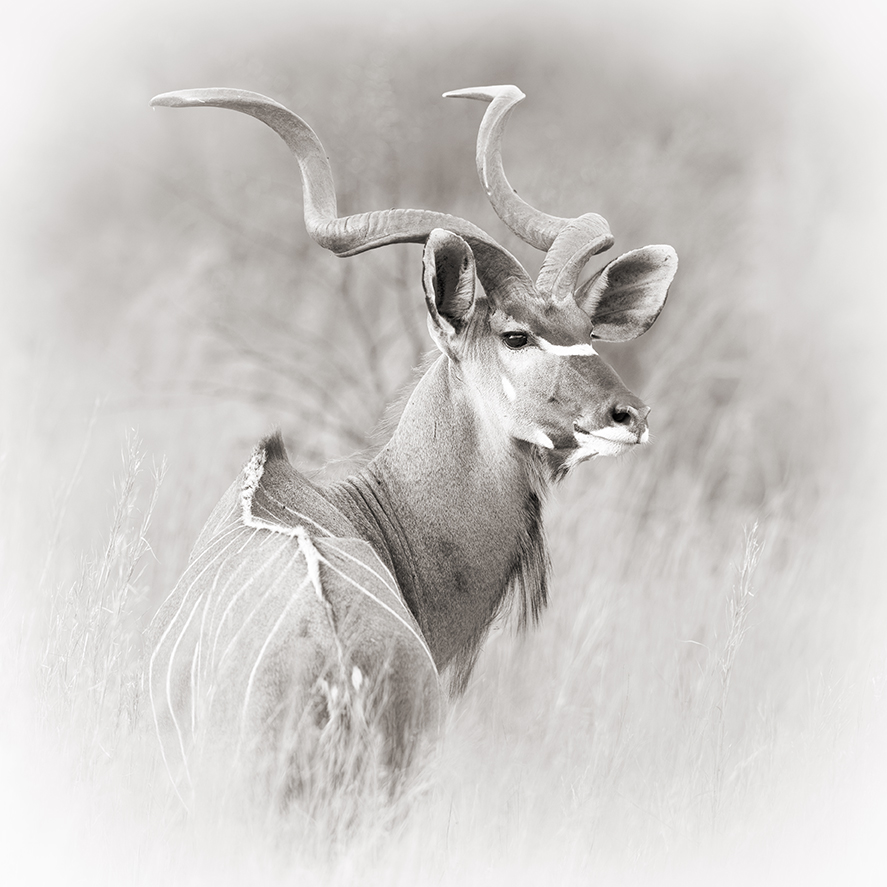
A kudu bull looking back over his shoulder before he disappears into the bushes.
The unpopular jackal
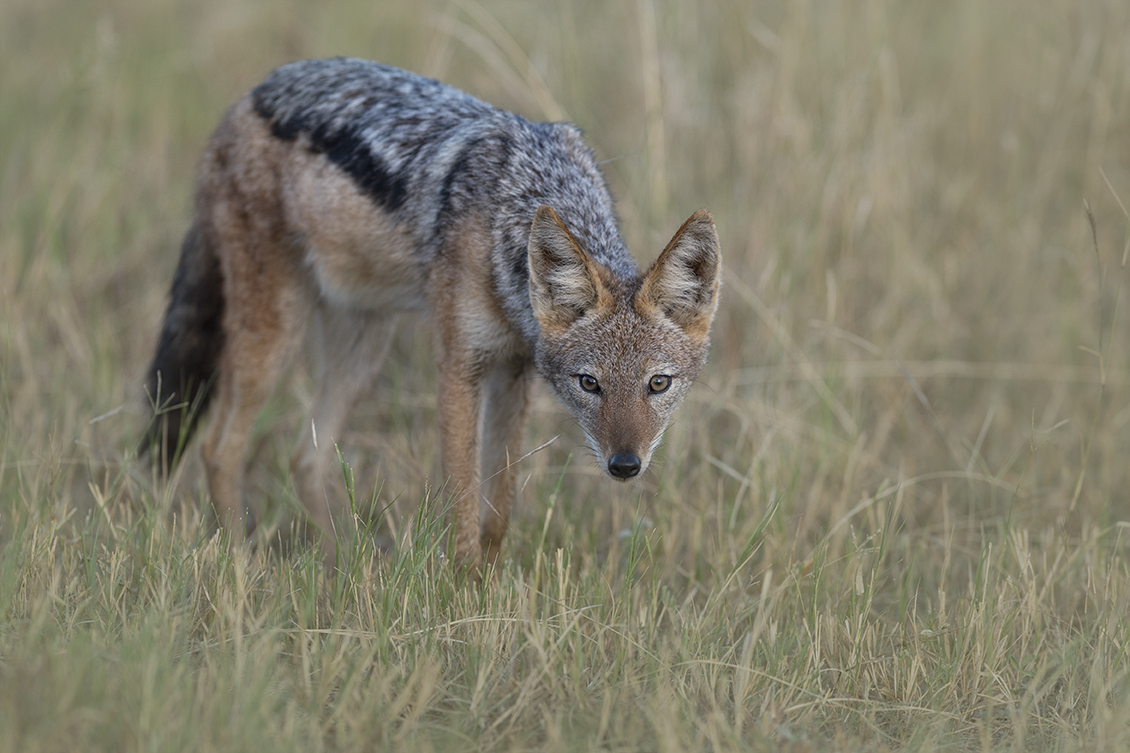
For the farming community in South Africa, jackals are a costly nuisance, as they kill sheep that are an important agricultural livestock. For a long time, bounties were paid for every hunted jackal. However, whether this really helped to keep the population in check is unclear. According to some, killing a jackal does no more than giving space to two or more jackals who will fight for the territory, and kill even more sheep in the process. I’m not a farmer, and for me seeing a jackal or hearing it in the night is an exciting event. Taking photos of the jackals in my neighborhood has so far been unsuccesful, so here is one from Pilanesberg National Park.
At mother’s side
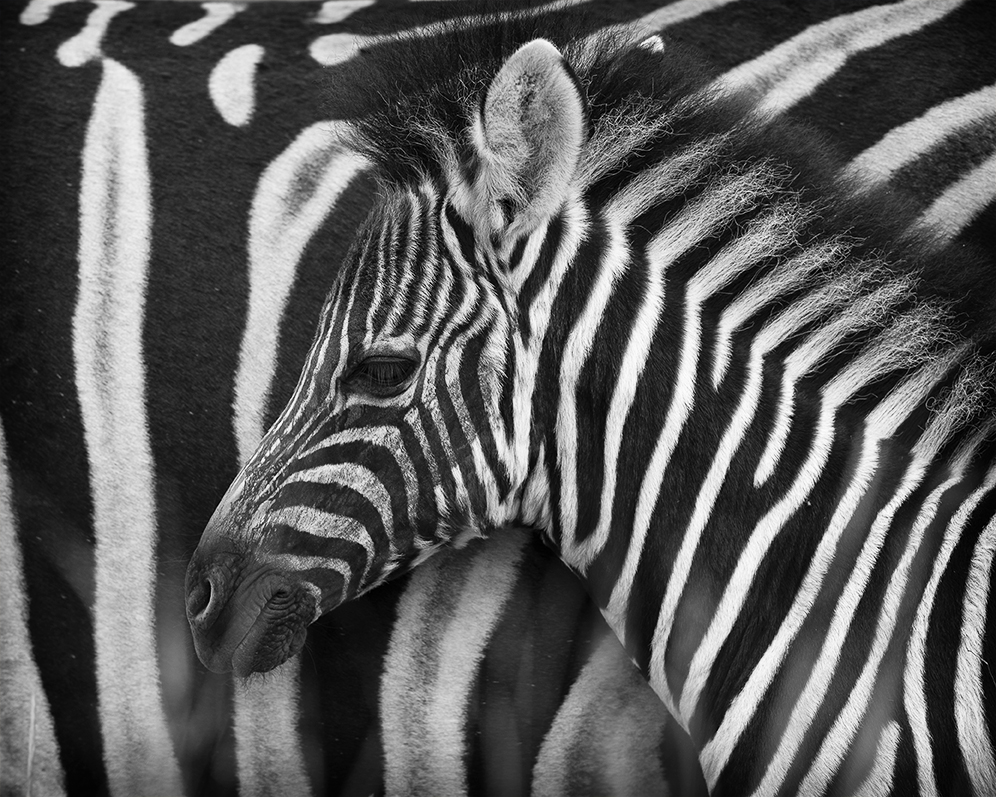
A baby zebra seeking the safety and comfort of her mother’s side. I love the stripes on stripes!
Kudu male
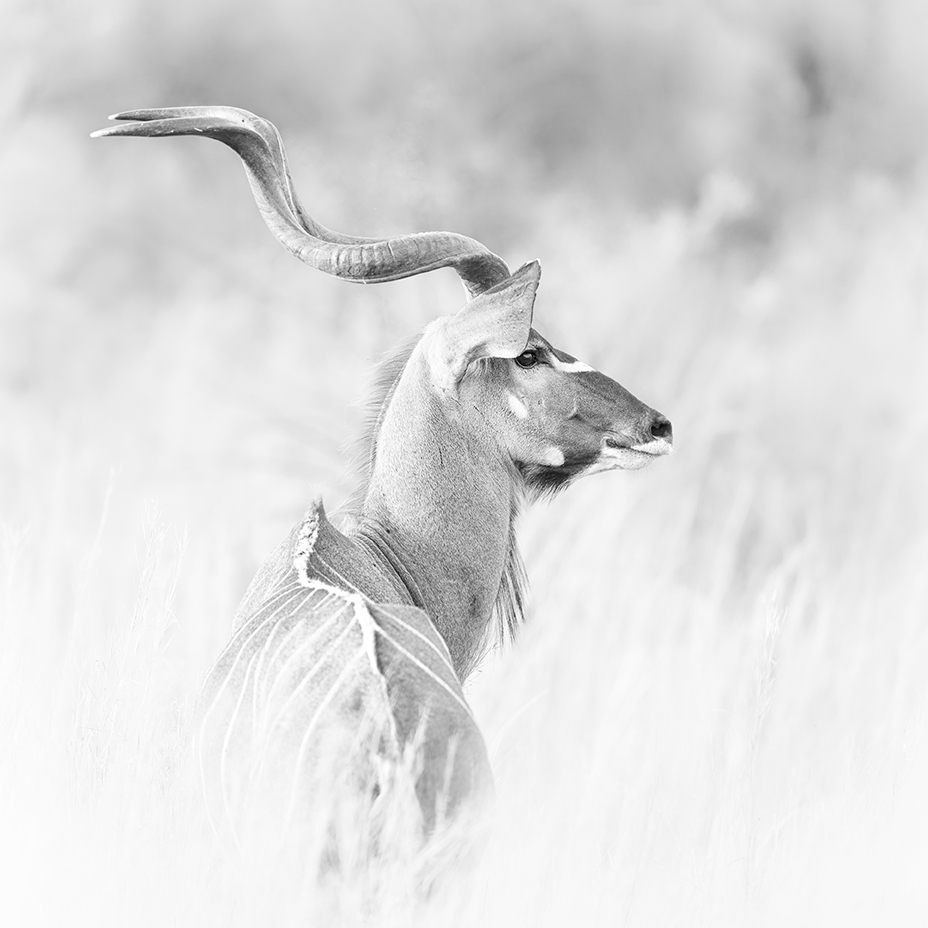
What a majestic beast is the kudu! This male was out walking with his harem in the afternoon when the sun was setting. Actually, male kudus generally live in bachelor groups, or, more often, solitarily.
Elephant family drinking
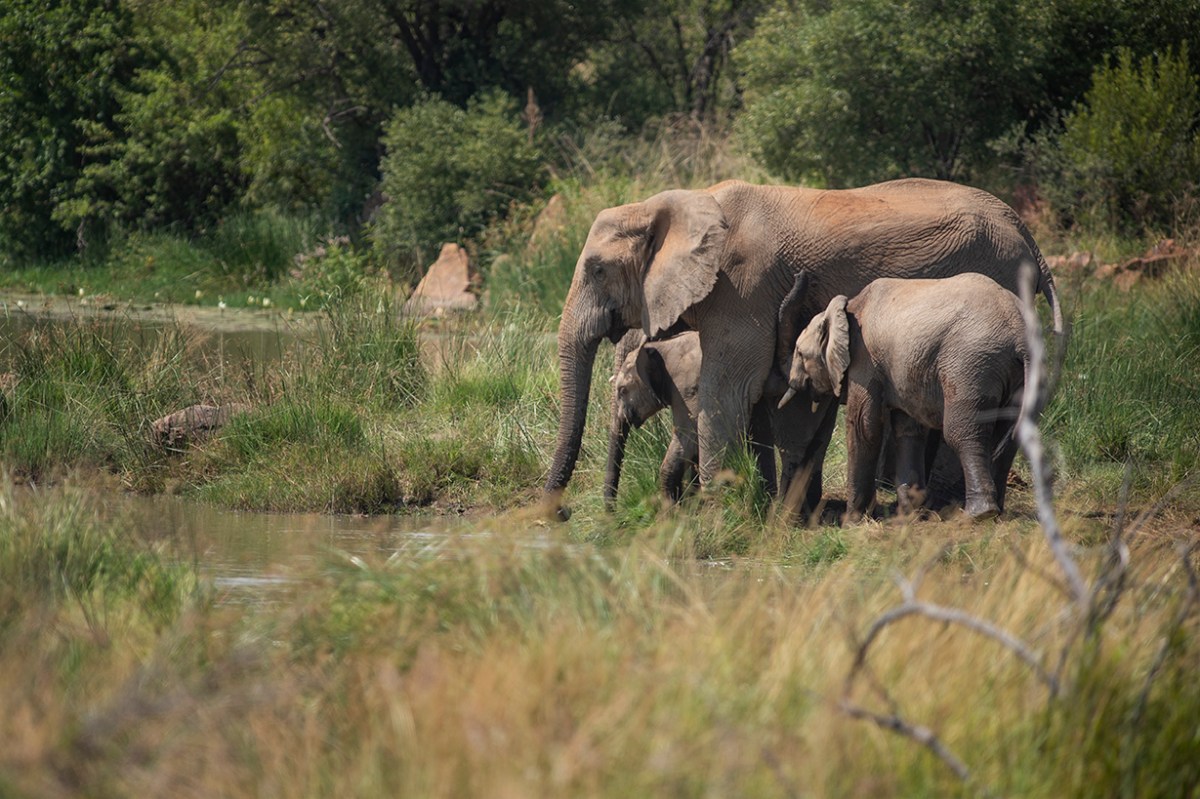
A family of elephants drinking at a waterhole in Pilanesberg National Park. I love how green everything still is! It makes seeing animals a little bit more challenging, but the sightings that you do get are usually great because they are really close.
 Awesome wonder