
A young cheetah looks back over its shoulder. Cheetahs are weaned at the age of six months, but usually stay with their mother for some time after that. After 17 to 20 months, the mother can have another litter, so that often marks the end of the time of the youngster with the mother. Although young cheetahs from as young as six months go after hares or young antilopes, they often are only able to bring down a kill on their own when they’re 15 months or older. The odds for cheetah cubs to survive into adulthood are not so good. Lions are major predators of juveniles. This particular young cheetah was left to fend for itself for just one day when it was killed by predators…
Tag: photoblog
What’s up folks?

A group of impalas all looking in the same direction. We do too. Every now and then one snorts. We try to see what they are seeing, hearing or smelling. Then they all turn and run away. Something must have been there … but unfortunately in the thick bush we were unable to find out what. Another “invisible leopard” sighting…
Tree squirrel
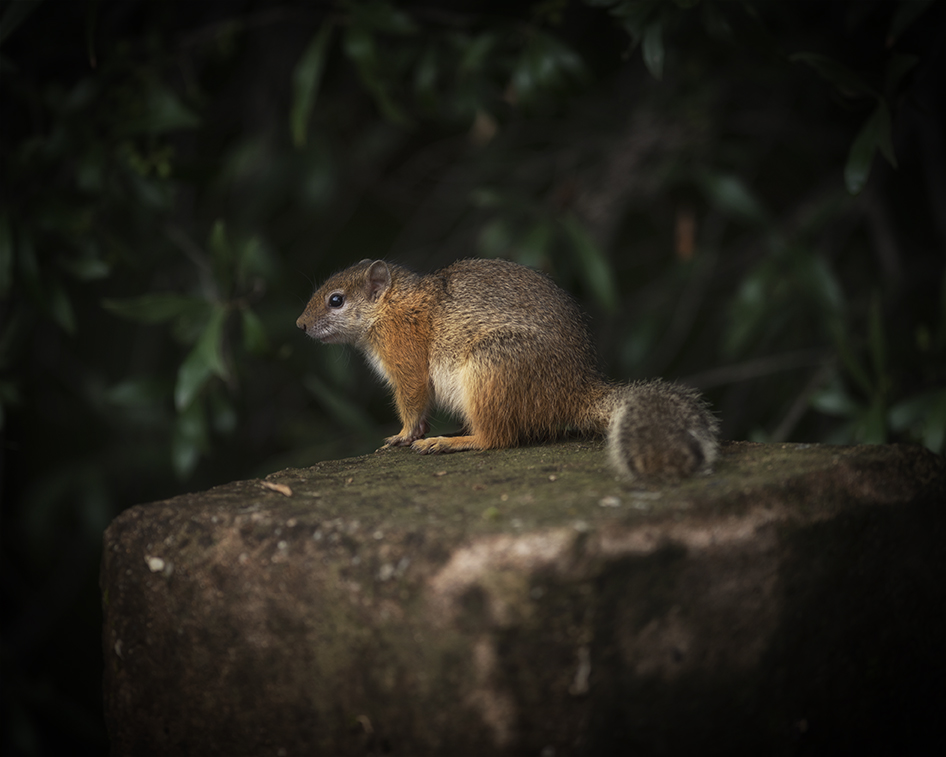
Safari guides are generally not very impressed if we spot a tree squirrel. But we happen to like these cute animals. So even though we had hoped to find a leopard hiding under this bridge, we were happy to see the squirrel instead!
Citrus swallowtail
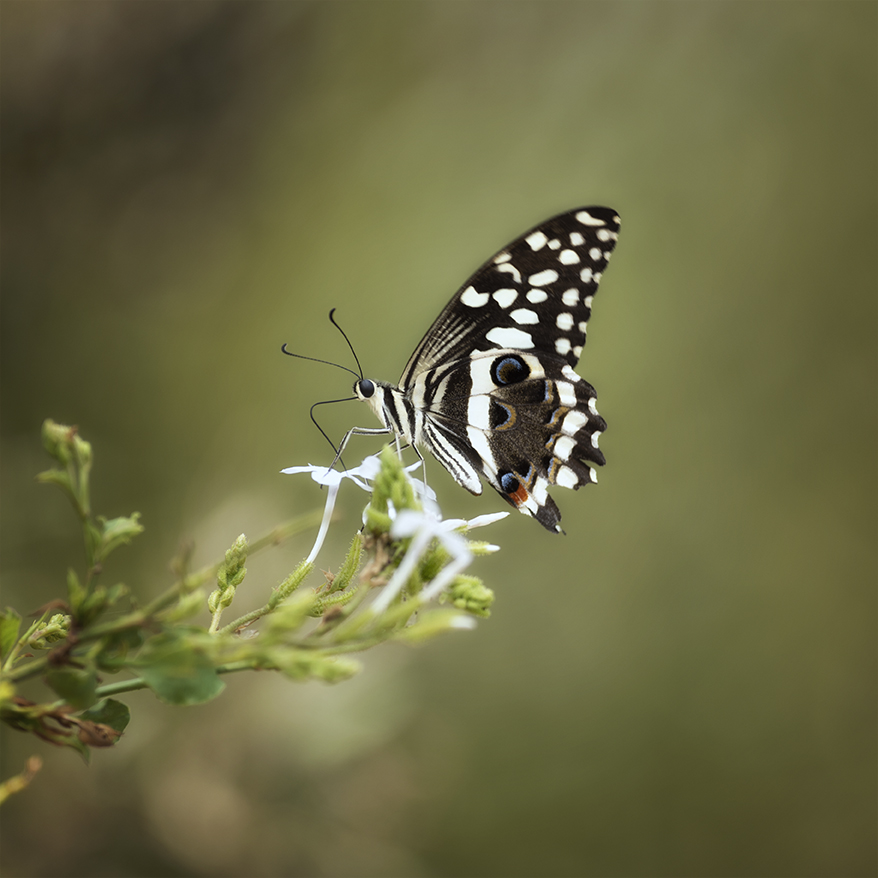
A last remembrance of summer before we head into winter territory…
Looking back…
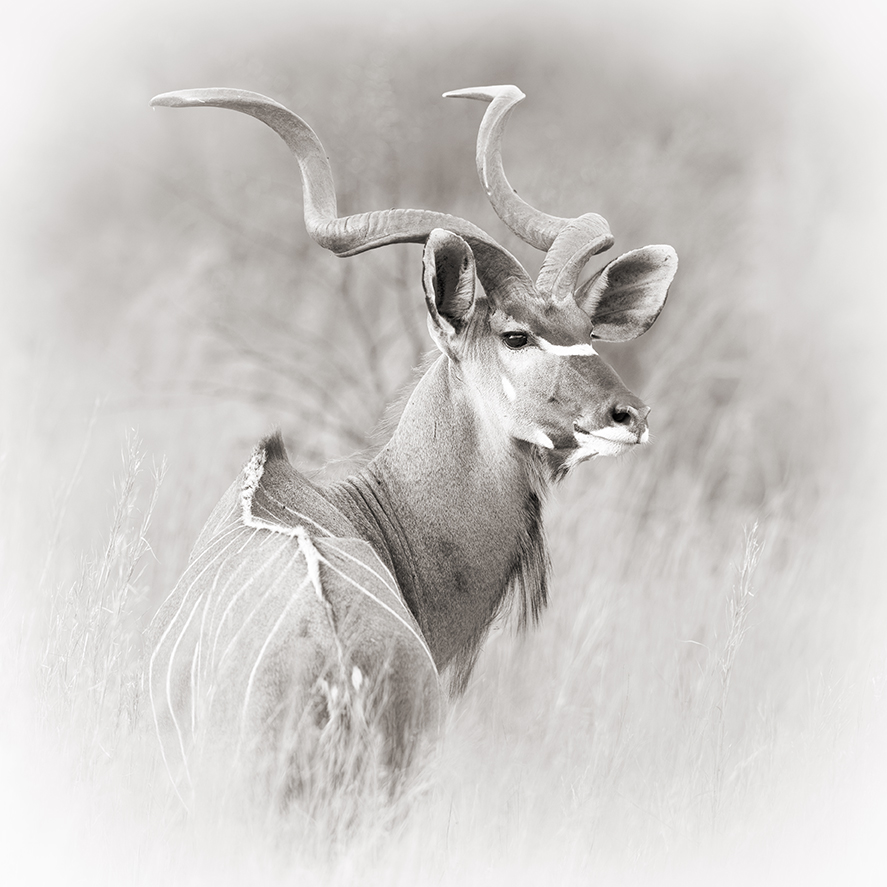
A kudu bull looking back over his shoulder before he disappears into the bushes.
Natal spurfowl
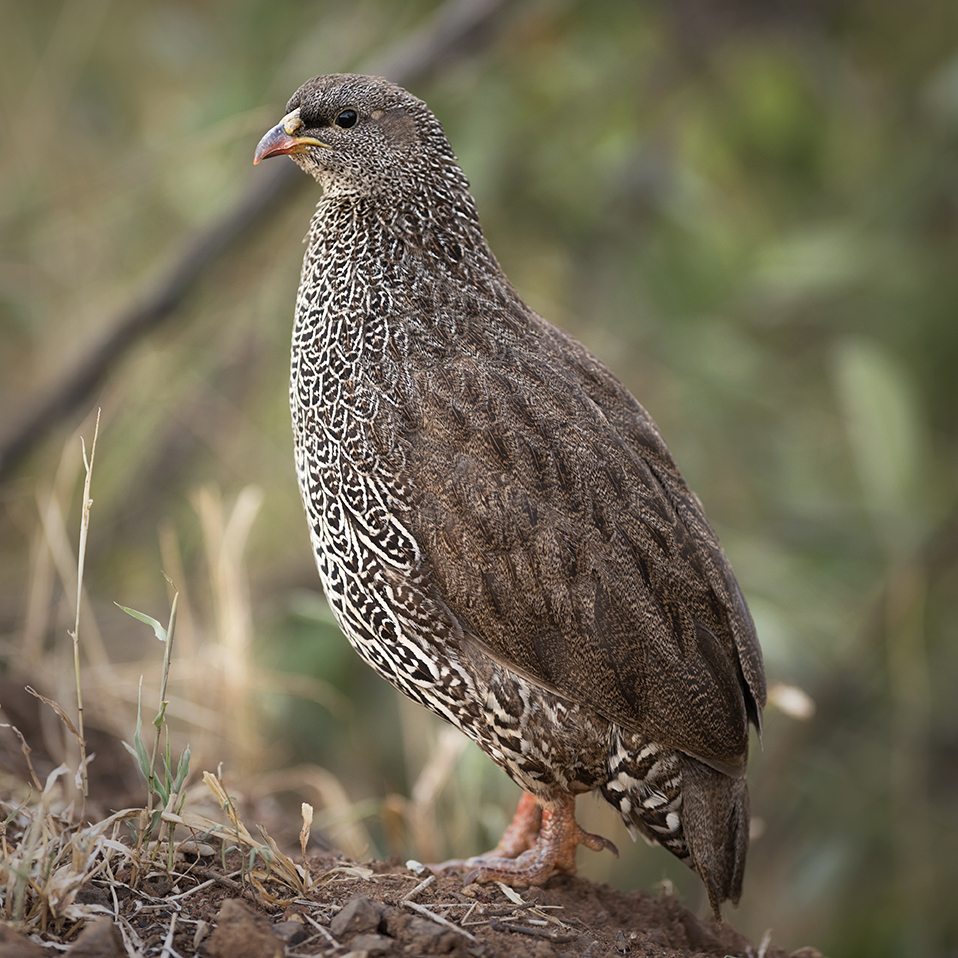
Natal spurfowls live in pairs or in groups of up to ten birds. They fly when scared, but spend most of their time on the ground looking for insects and seeds.
Huey, Dewey, and Louie
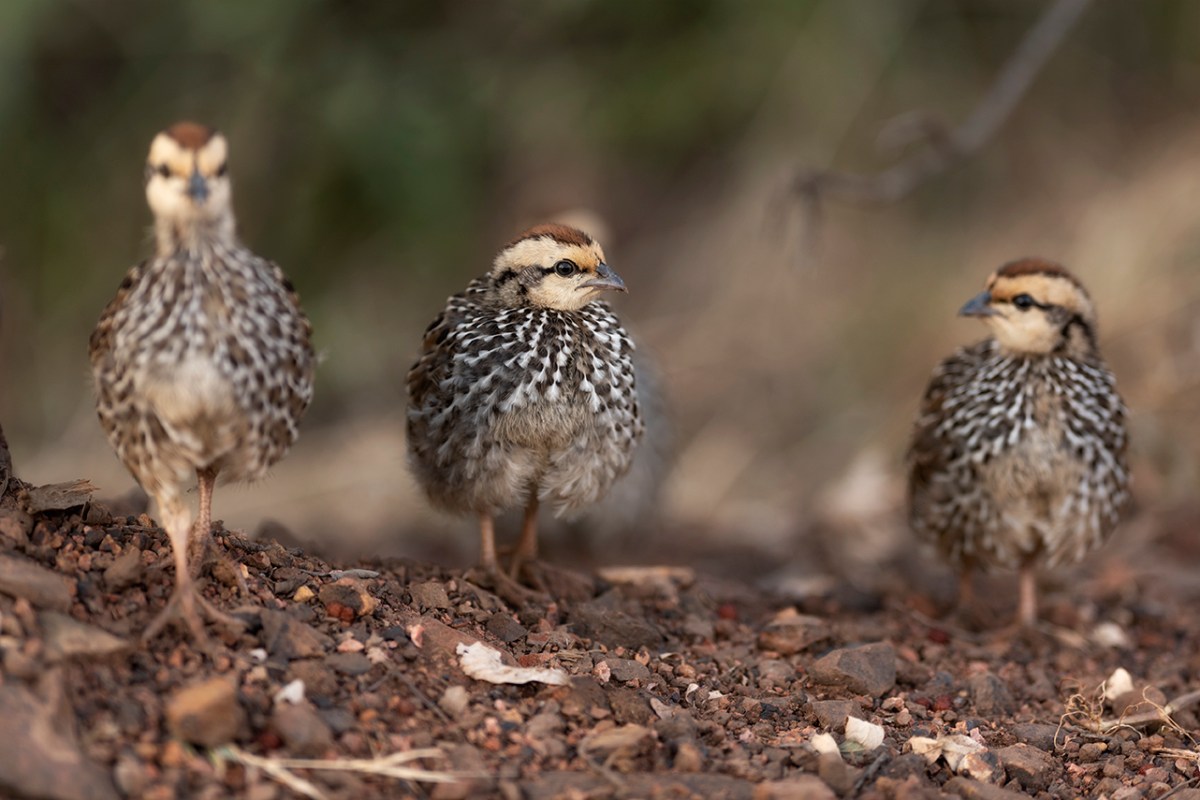
Three small Natal spurfowl chicks. So fluffy and adorable!
Dawn at the waterhole
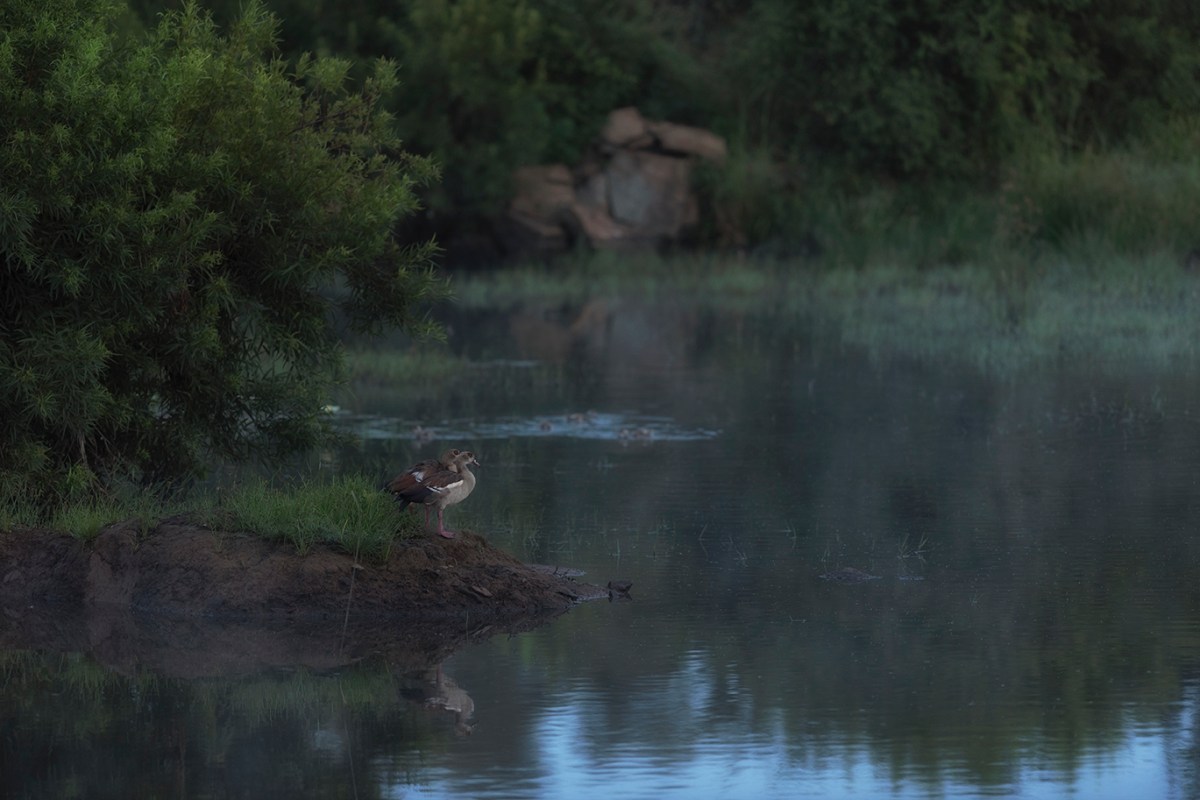
Winter is coming, they say. In Pilanesberg the mornings are becoming chilly, with mist that forms over bodies of water like this waterhole. The Egyptian geese are just waking up and arranging their feathers. It’s going to be a lovely day!
Spotted thick-knee
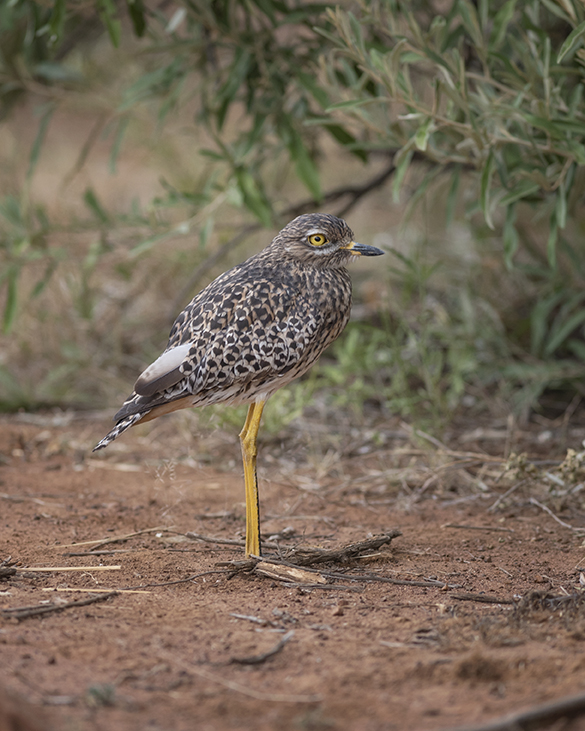
The spotted thick-knee or dikkop (the Afrikaners and the English disagree about which part of the bird is thick…) always looks kind of sleepy. Its plumage gives excellent camouflage in the long grass, so it can be hard to spot this bird. At night, the bird becomes active and starts to hunt for whatever it can find on the ground: insects, lizards, and even small mammals.
 Awesome wonder