Snack on the go

A big bull elephant having a snack on the go. Elephants are vegetarians; they eat leaves, bark, grass, roots, and even fruits. Although they eat a massive amount of food each day – up to 150 kg! – their digestive system doesn’t break it down very effectively. Elephant dung therefore still contains a lot of nutrients, which other animals make use of!
Photo taken in Pilanesberg National Park

Baby rhino

An adorable baby rhino resting in the shade. Rhinos spend their days and nights grazing, only resting during the hottest hours of the day. After birth, a baby rhino can walk within an hour. A rhino is born without a horn, but the front horn becomes visible within one or two months. The back horn starts growing when the calf is about a year old. The calf will stay with its mother for about three years before setting off on its own.

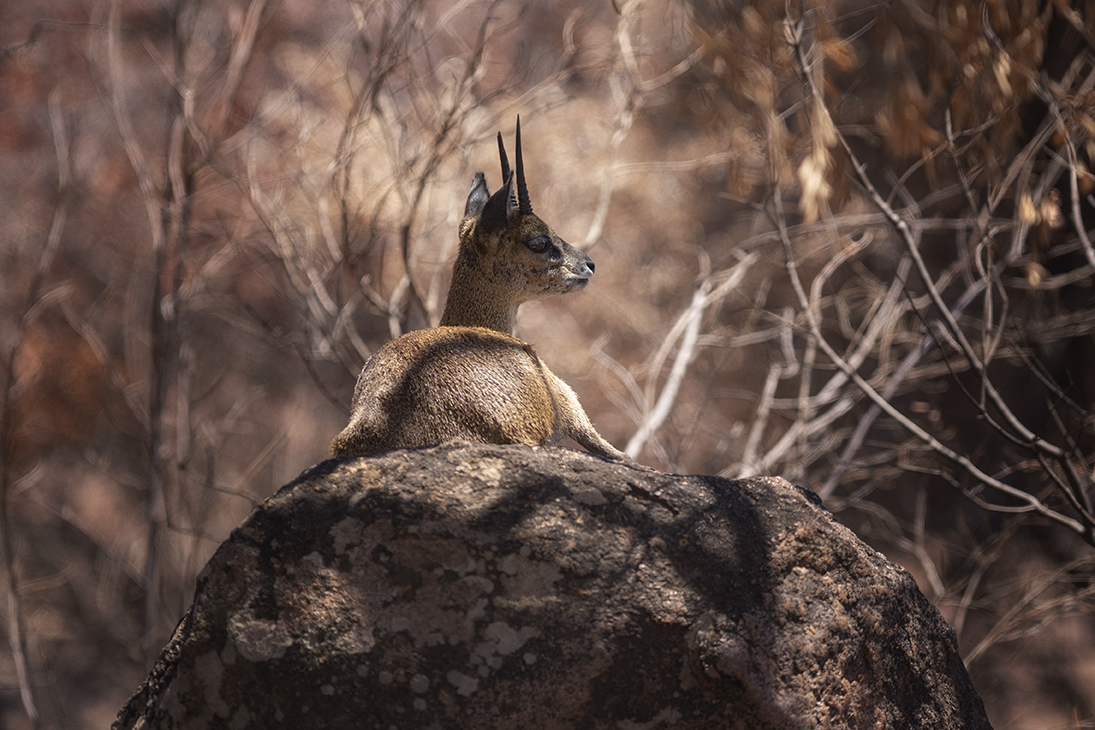
Klipspringer resting on a rock

One of my favorite animals since we first saw them in a zoo in the Netherlands. Klipspringer literally means ‘rock jumper’, and it is one of the things they do best. You can find them on rocky outcrops, although they are hard to spot because their coat blends in so well with the environment. Klipspringers are largely monogamous, and partners generally stay within five meters of each other. Females are generally a bit larger than the males, but only the males have short and spiky horns. Such a joy to find these in the wild!

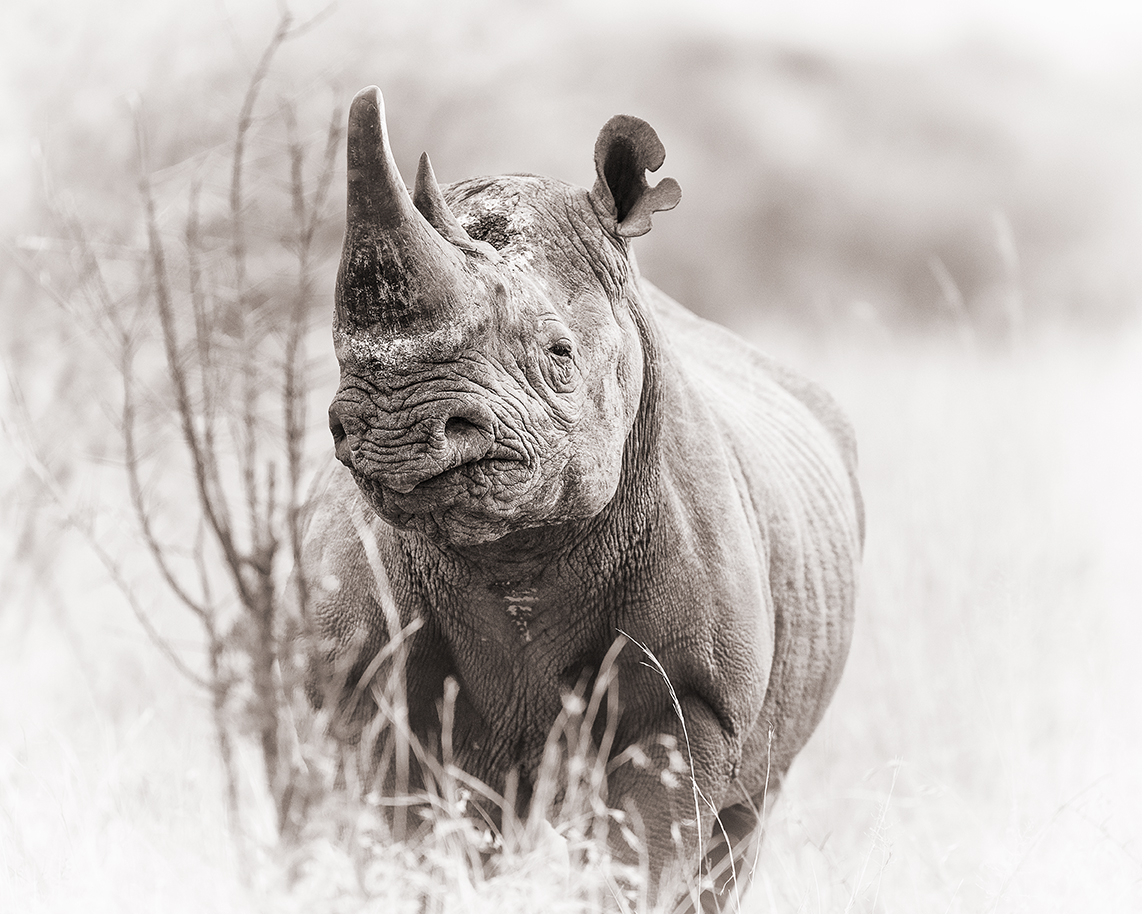
Black Rhinoceros

My first black rhino! The black rhino is actually not black in color, but brown or grey like its cousin the white rhino. One of the main differences between the black and the white rhino is the shape of its lips. The mouth of the black rhino has a slight V-shape, unlike the white rhino which has a straight mouth. This is why the species are also known as hook-lipped rhinoceros for the black, and square-lipped rhinoceros for the white.