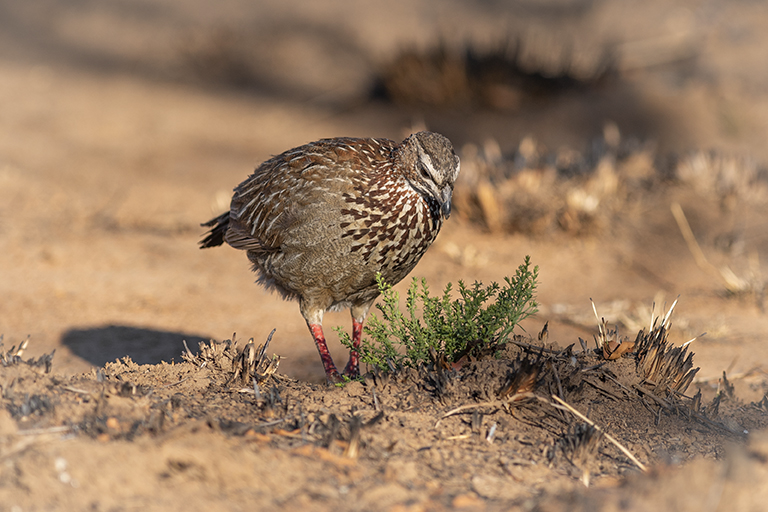
African wattled lapwing

The wattled lapwing prefers wet grasslands to breed, but will be found in other grassy environments to catch insects. I love the look of surprise on this lapwing’s face!
Photo taken in Rietvlei Nature Reserve.
Nikon d750, 420mm, f4, 1/1000, ISO 100.

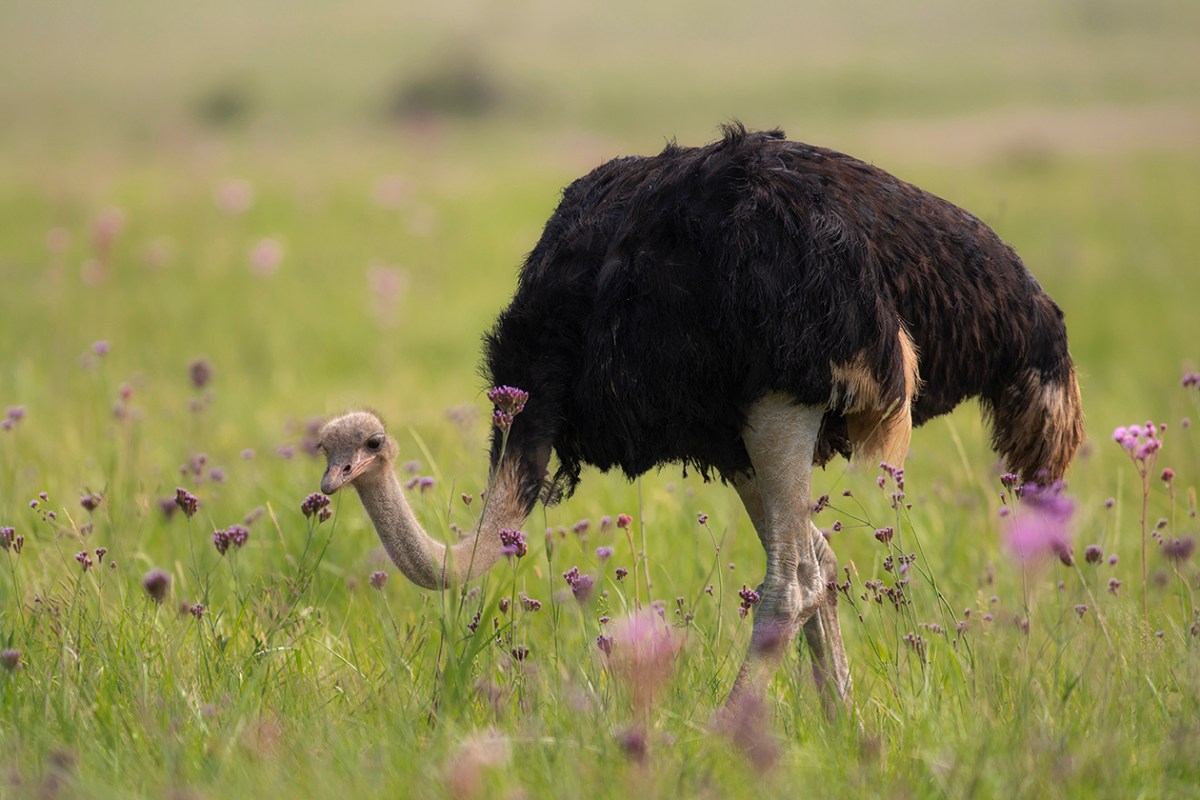
Ostrich in a field with purple flowers

A male ostrich is foraging between the purple flowers of the pompom weed. Pompom weed has been called an ‘evil beauty’. It makes the fields look beautiful, but in fact it is an invasive plant that threatens indigenous grasslands. It makes me wonder how we define beauty… Now that I now that this plant is a threat, I look at it in a different way. Somehow, beauty seems to be informed by knowledge as well as aesthetical value!
Photo taken in Rietvlei Nature Reserve
Nikon d750, 420mm, f4, 1/1000, ISO 100.

Secretary bird

The magnificent secretary bird is one of my favorite animals to encounter on a safari. So it really felt as a gift from the universe to encounter one on my birthday yesterday! We spotted it while it was still far off. Luckily, while we waited he came closer and closer to our vehicle so that I was able to capture this image.
Photo taken in Rietvlei Nature Reserve.

Young zebra

Rietvlei at the moment is so amazingly beautiful! The fields are green and purple and yellow… all the colours of an enchanting summer. This young zebra obliged for a portrait in front of a field of purple flowers. The animals don’t really seem to like the flowers, though, they prefer their grass to be green!

Southern Yellow-billed Hornbill

Hornbills are birds with huge bills that can account for up to 1/6th of the entire body length. Because of their large beak, the hornbill can’t see very well what is right in front of them. They will often search for food on the ground, overturning twigs and leaves to find insects.
Photo taken in Pilanesberg National Park

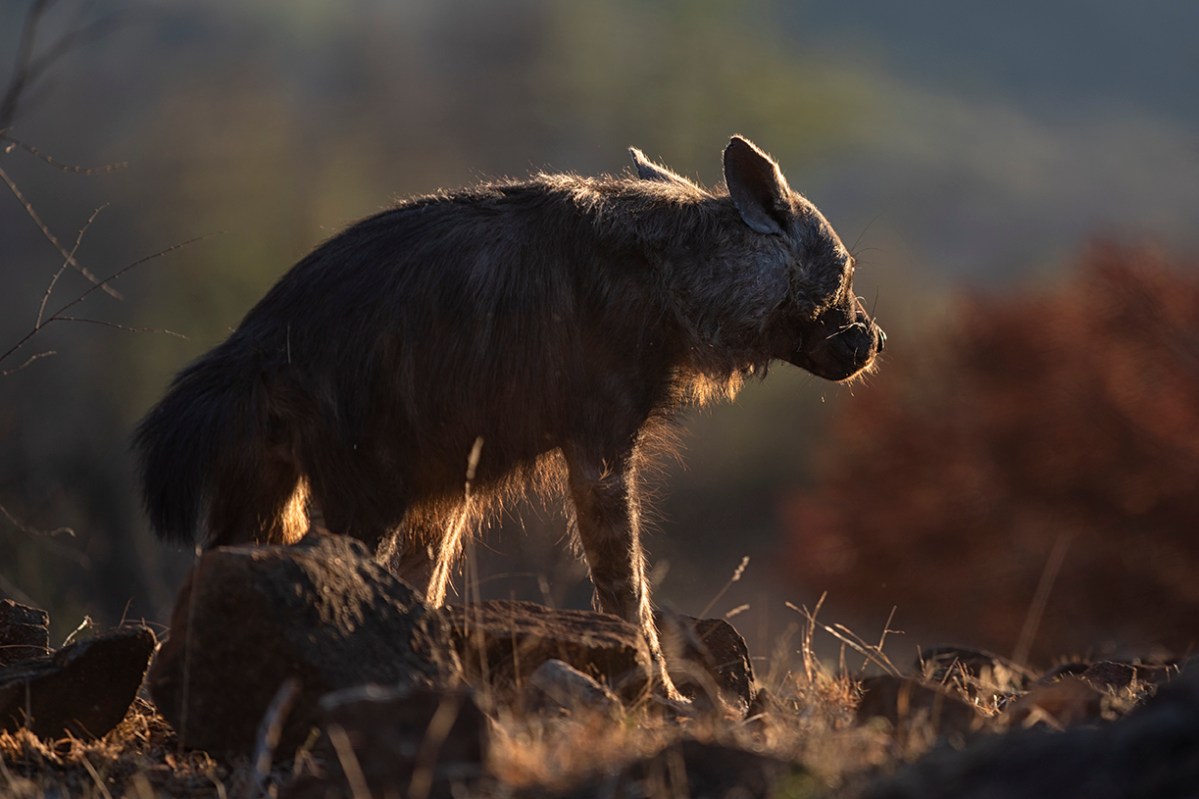
Brown hyena marking its territory

If there’s one word for the brown hyena it must be shaggy. The brown hyena has a longer coat than the better known spotted or striped hyenas. This, however, doesn’t make it a glamorous animal. Rather, his coat looks mangy and moth eaten. Brown hyenas are mainly scavengers, crushing even the bones of carcasses that other predators leave behind. The animal in the picture is marking its territory with a white and a black paste. Research has shown that the white paste is a general boundary marker for other hyenas: this is my territory. The black paste communicates to members of the same clan that this area is already searched for food; the smell of this paste fades after a few days.
Photo taken in Pilanesberg National Park

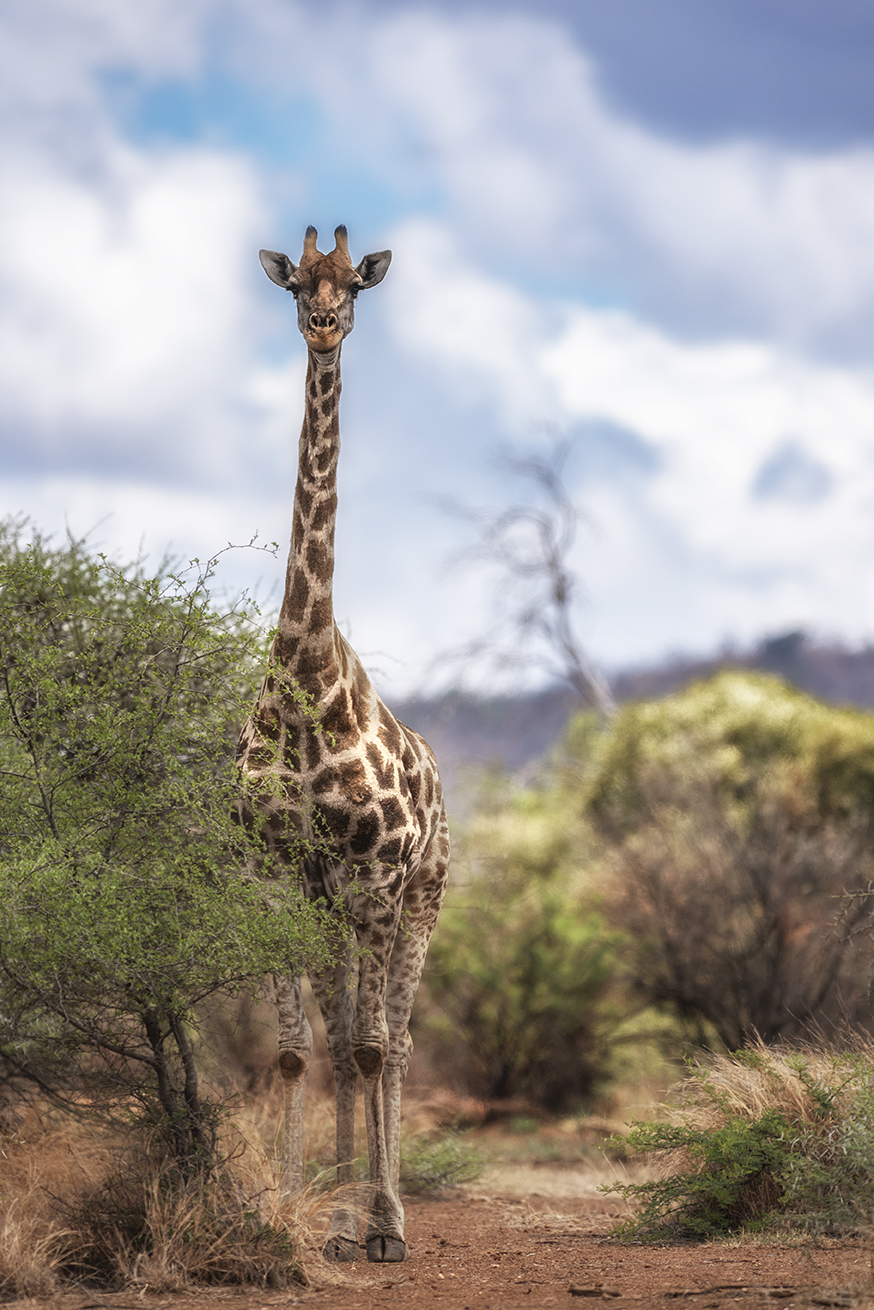
Giraffe

Giraffes are so tall they are actually quite hard to photograph with a telelens. Glad to have gotten some landscape in there with this one!
Photo taken in Pilanesberg National Park