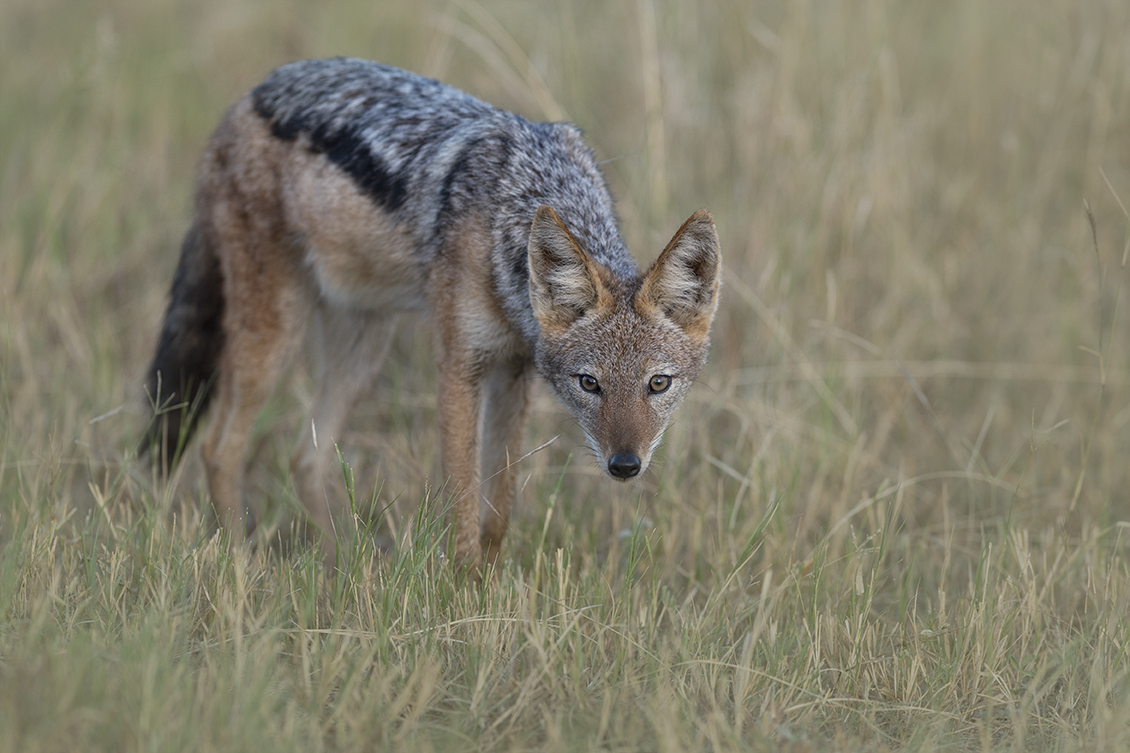
For the farming community in South Africa, jackals are a costly nuisance, as they kill sheep that are an important agricultural livestock. For a long time, bounties were paid for every hunted jackal. However, whether this really helped to keep the population in check is unclear. According to some, killing a jackal does no more than giving space to two or more jackals who will fight for the territory, and kill even more sheep in the process. I’m not a farmer, and for me seeing a jackal or hearing it in the night is an exciting event. Taking photos of the jackals in my neighborhood has so far been unsuccesful, so here is one from Pilanesberg National Park.
Tag: wildlife photography
Leopard after a meal

The beautiful leopard at Pretoria Zoo has just finished its meal of a whole chicken – but I feel he’s asking me for more!
African wattled lapwing

The wattled lapwing prefers wet grasslands to breed, but will be found in other grassy environments to catch insects. I love the look of surprise on this lapwing’s face!
Photo taken in Rietvlei Nature Reserve.
Nikon d750, 420mm, f4, 1/1000, ISO 100.
Southern Yellow-billed Hornbill

Hornbills are birds with huge bills that can account for up to 1/6th of the entire body length. Because of their large beak, the hornbill can’t see very well what is right in front of them. They will often search for food on the ground, overturning twigs and leaves to find insects.
Photo taken in Pilanesberg National Park
Kudu bull
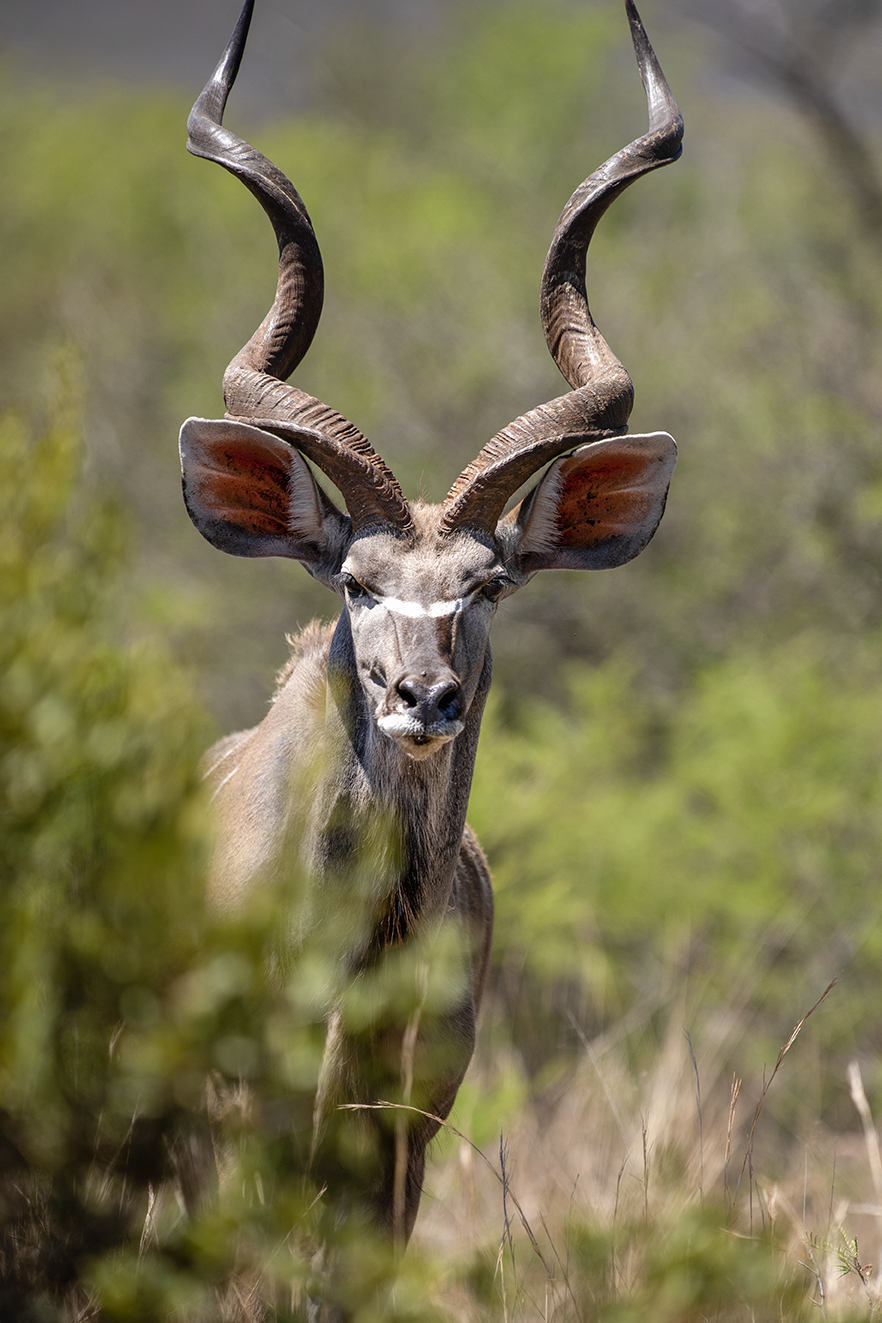
A beautiful male kudu appearing from the bush. Look at those horns! This male is one of a bachelor group of six big bulls in Pilanesberg National Park.
Brown hyena marking its territory
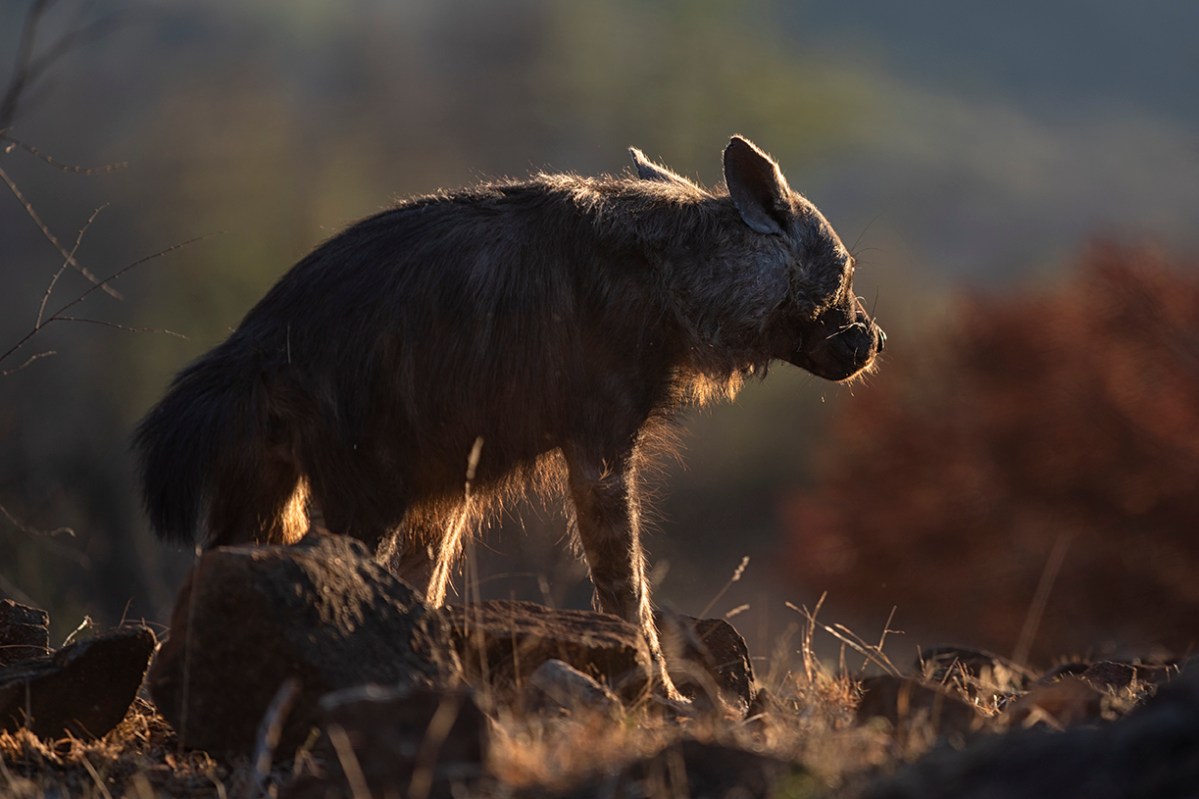
If there’s one word for the brown hyena it must be shaggy. The brown hyena has a longer coat than the better known spotted or striped hyenas. This, however, doesn’t make it a glamorous animal. Rather, his coat looks mangy and moth eaten. Brown hyenas are mainly scavengers, crushing even the bones of carcasses that other predators leave behind. The animal in the picture is marking its territory with a white and a black paste. Research has shown that the white paste is a general boundary marker for other hyenas: this is my territory. The black paste communicates to members of the same clan that this area is already searched for food; the smell of this paste fades after a few days.
Photo taken in Pilanesberg National Park
Giraffe
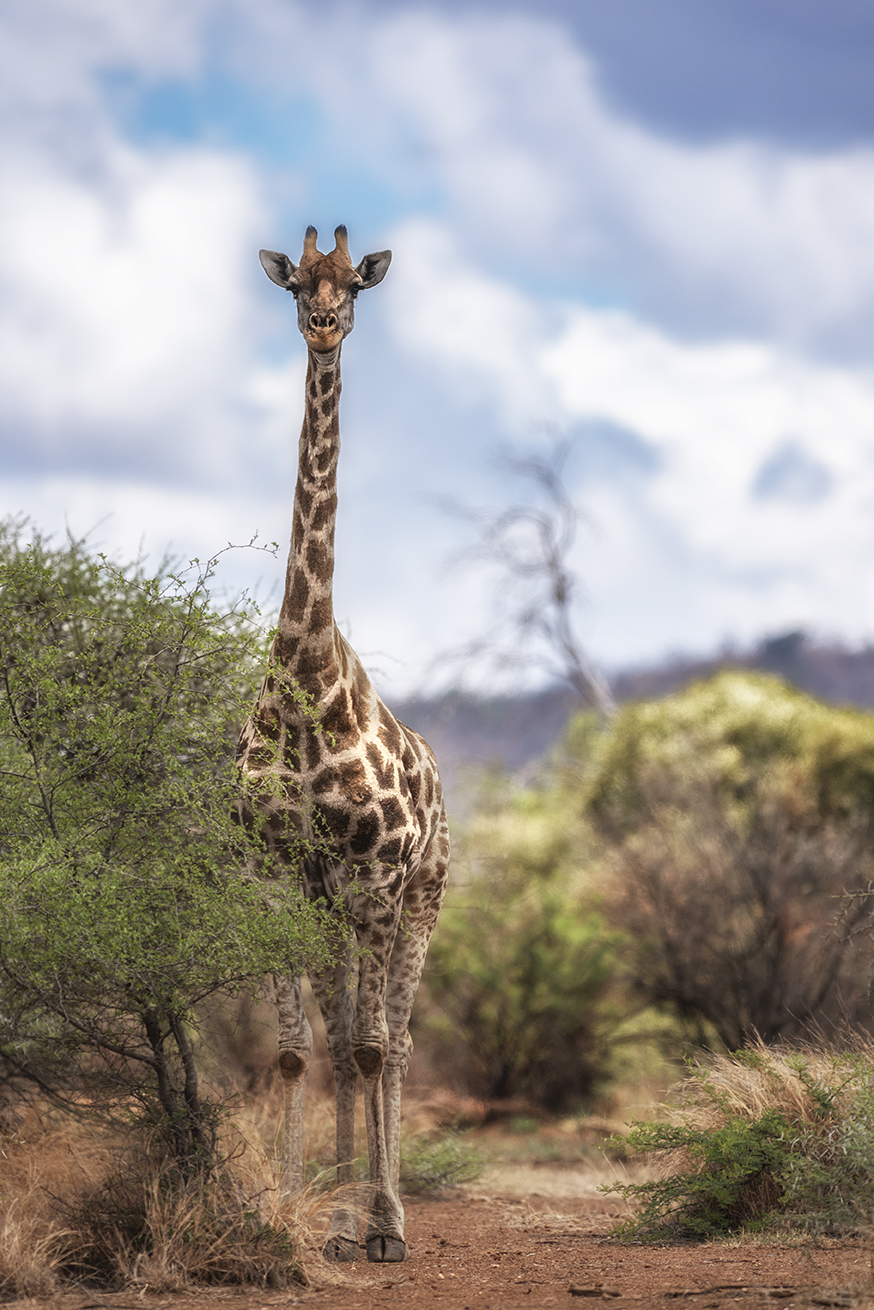
Giraffes are so tall they are actually quite hard to photograph with a telelens. Glad to have gotten some landscape in there with this one!
Photo taken in Pilanesberg National Park
Maximus in black and white

Maximus is one of the big male leopards in Pilanesberg National Park. In general, male leopards are larger and more muscular than the females. They live alone, seeking the company of females only in the mating season. Male leopards are known to fight with other males who intrude in their territory. Females are less aggressive towards other leopards, and their territories are smaller.
White-bellied sunbird
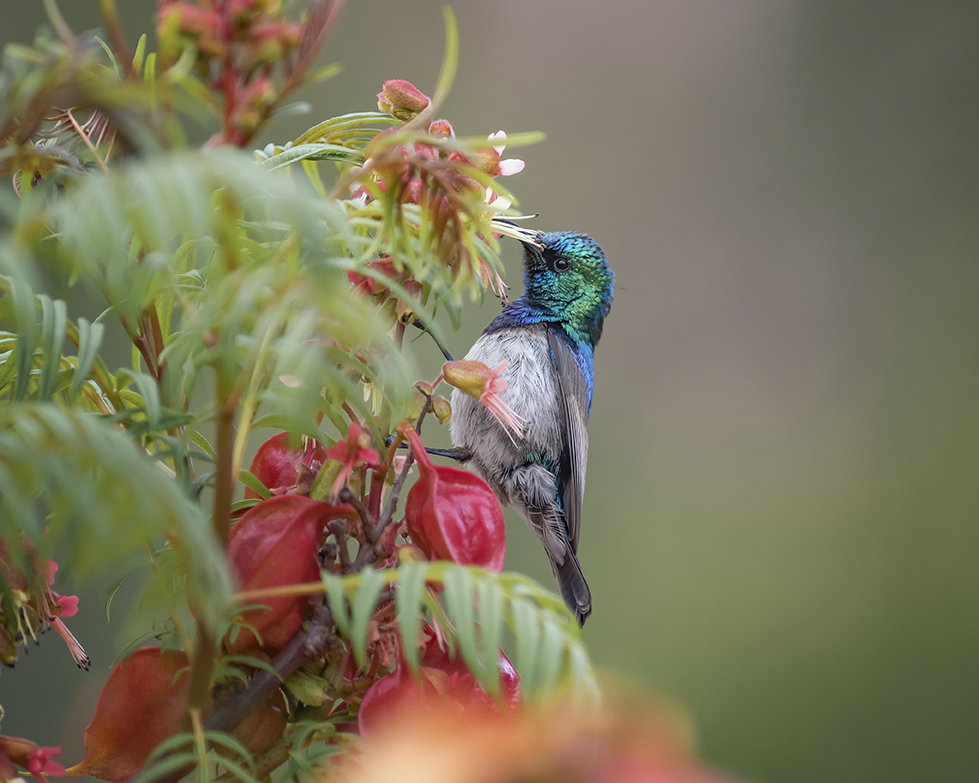
The white-bellied sunbird is one of the beautifully colored sunbirds of southern Africa. I took this photo in Pilanesberg National Park, but they are common around our house as well. Actually, once a female white-bellied sunbird flew through a window into our livingroom. She sensed immediately that something was wrong and perched on one of the windowsills in front of a closed window. She didn’t protest when I scooped her up in my hand and let her outside. A white-bellied sunbird is 10 cm long and weighs between 6 and 10 grams. Such a special experience to hold this tiny bundle of feathers in my hands!
 Awesome wonder