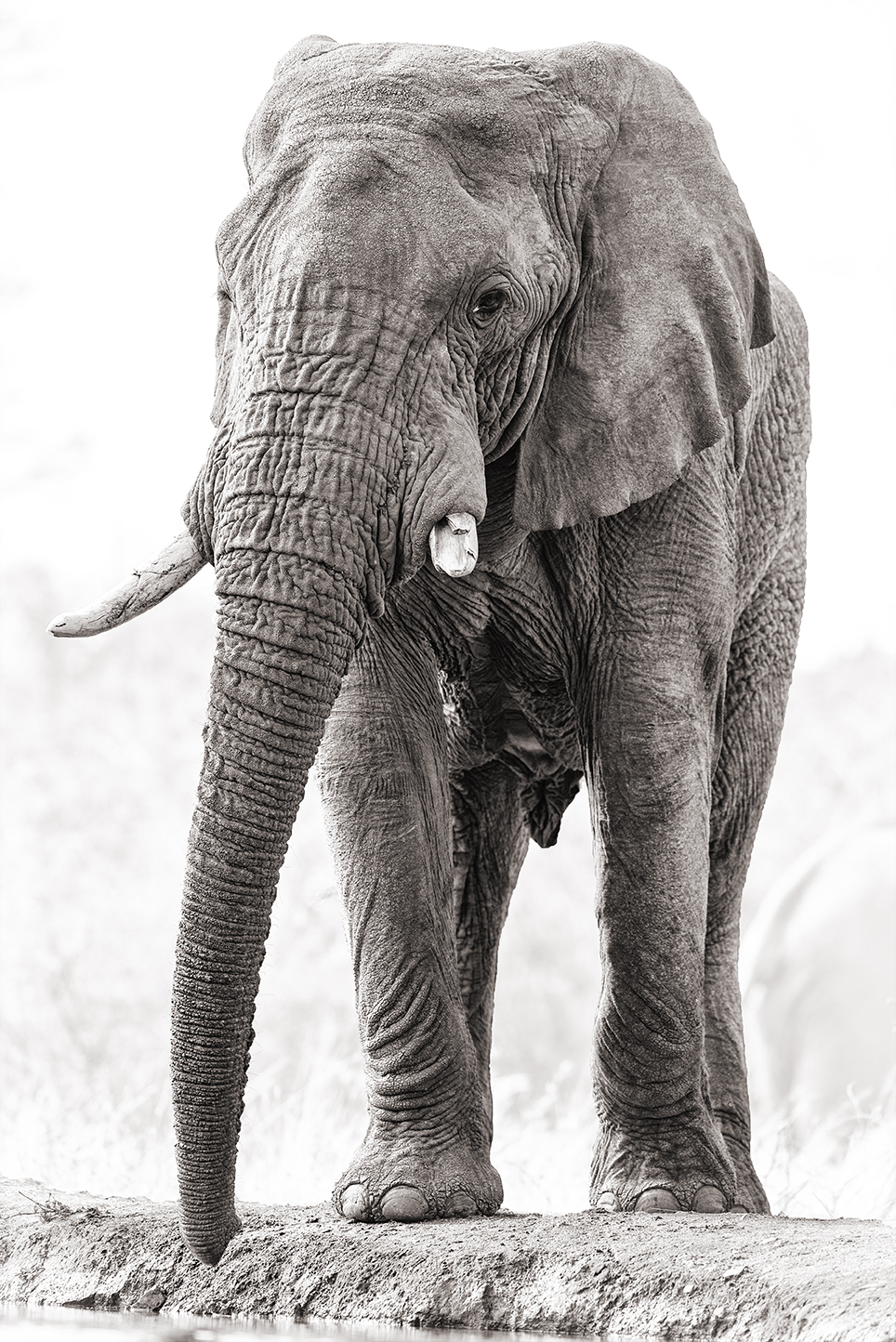
Rhino and pied crow

A rhino with a pied crow perched precariously on its upper horn.
 
I’m trying not to see this as a symbolic picture about the fate of the rhinos…
 
Usually the oxpeckers fulfill the role of personal grooms, but sometimes crows will try to find sustenance – or possibly a ride? – as well. The rhino wasn’t too happy about this visitor though and flapped his ears to scare it off.

Fighting giraffes

Giraffes seem such gentle animals, but looks can deceive. Giraffes fight by clobbering each other with their necks. Male giraffes fight for dominance in a certain area, and for the right to mate with the females in that area. A giraffe’s neck is a powerful weapon, and the clashes of neck against neck can sometimes be heard from afar.

Leopard

We went to Pilanesberg to spot some leopards, and actually we were quite successful. We saw a young male enjoying his catch about three meters from our car. Under a dense bush. Then there was a female with her catch – behind a tree. And then, the top of our sightings, a female with cub. In a very leafy tree, 30 meters away.

After three days we had seen spots, tails and whiskers, but little more than that. So when we arrived in Madikwe, we told our guide that we really would love to see a leopard with a complete body not hidden by bushes.

And we got what we came for! Leopards are not as often seen in Madikwe as in Pilanesberg, but we were lucky that this male had killed an impala two nights before and was still working his way through the carcass. He even deigned to look our way! Happy!
Baby elephant

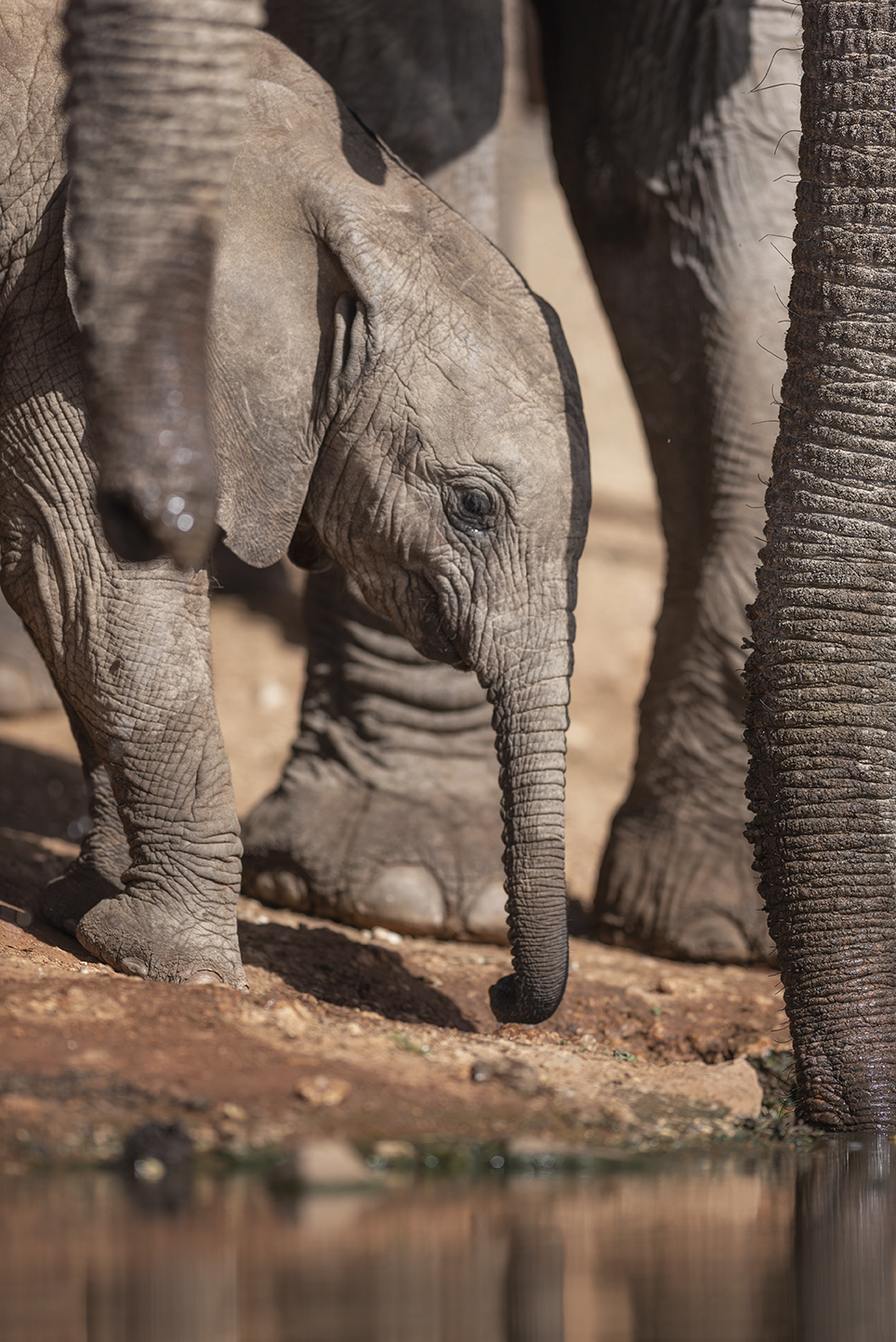
A small baby elephant drinks together with his family at a waterhole in Madikwe Game Reserve in South Africa. Together, the family will protect the youngest elephants by standing around them so that no harm can befall them. Around this baby you can see the feet and trunks of his family members.

Spotted hyena

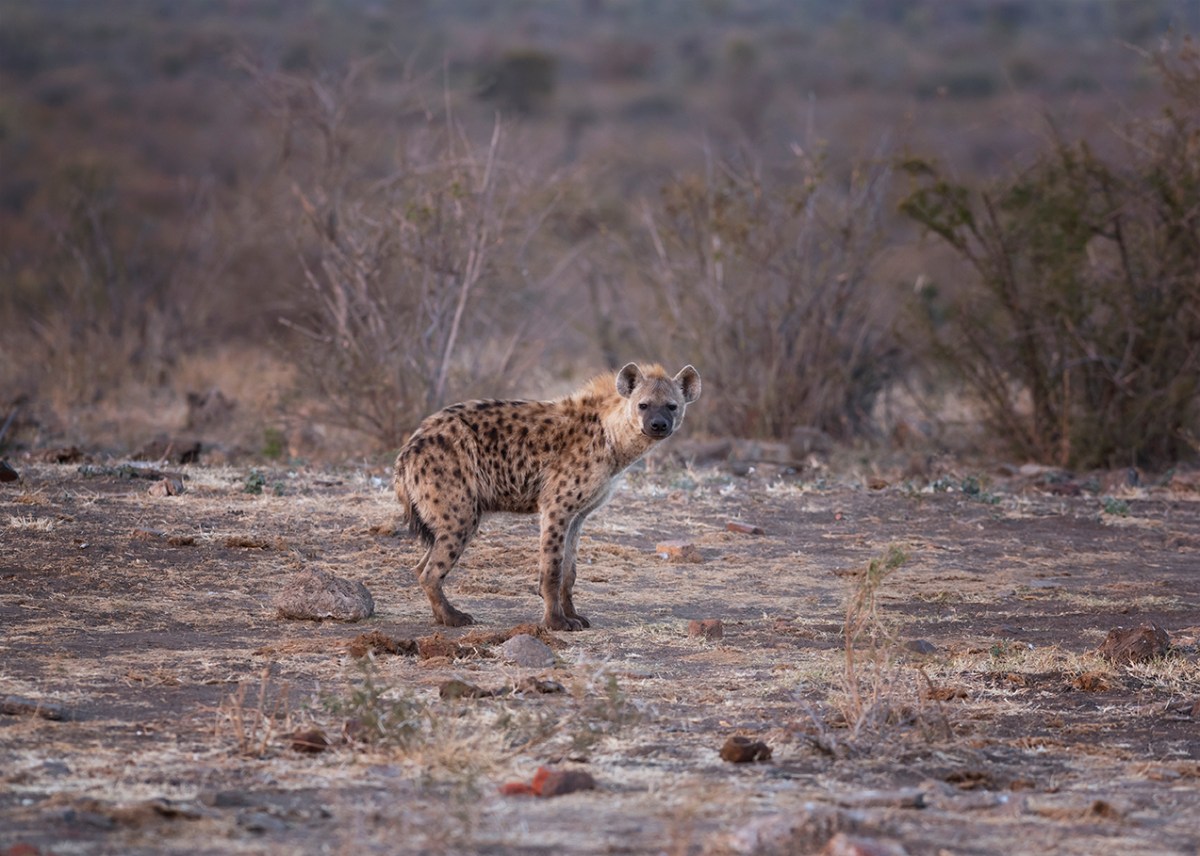
When I was younger and bent over a book or a computer game, my mother used to tell me to sit straight. I guess hyena mothers don’t do that enough… The front legs of the hyena are very well developed, as is its neck. The back legs, however, seem to lack in strength and muscles, thereby accounting for its strange posture.

Drakensberg hike

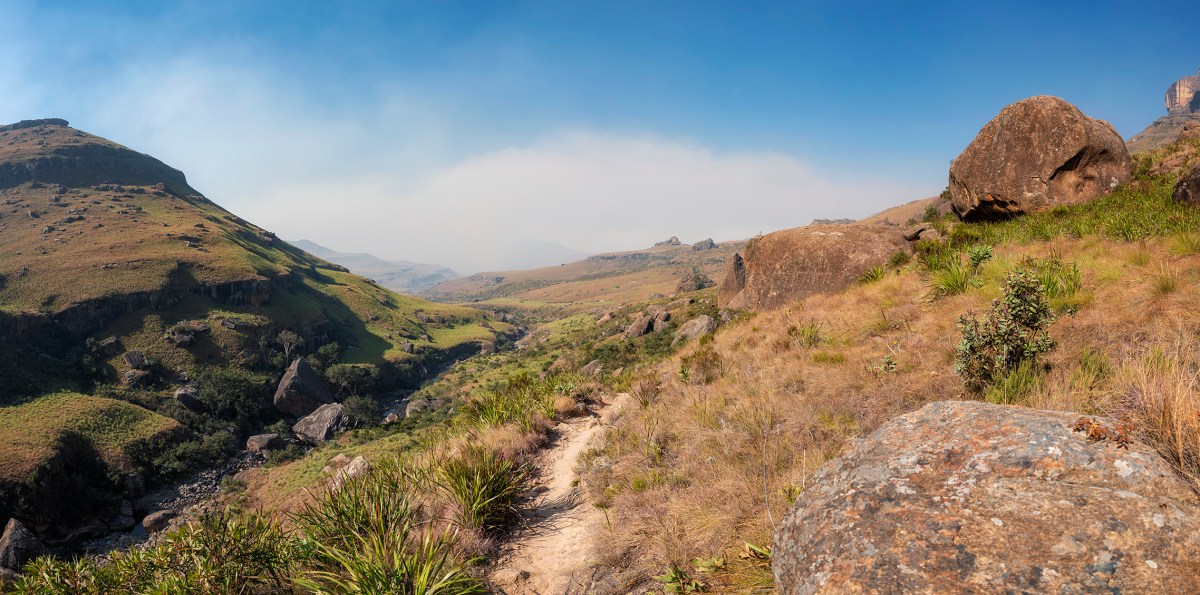
A beautiful hike in the Garden Castle section of the Drakensberg Mountains. The hike goes up to a cave called Pillar Cave. Although we didn’t make it all the way to the cave (still struggling with my back…) the scenery was amazing. The smoke in the background is from controlled burning of the grasslands to create firebreaks, protecting the World Heritage Site of the Drakensberg.

A mighty bull elephant

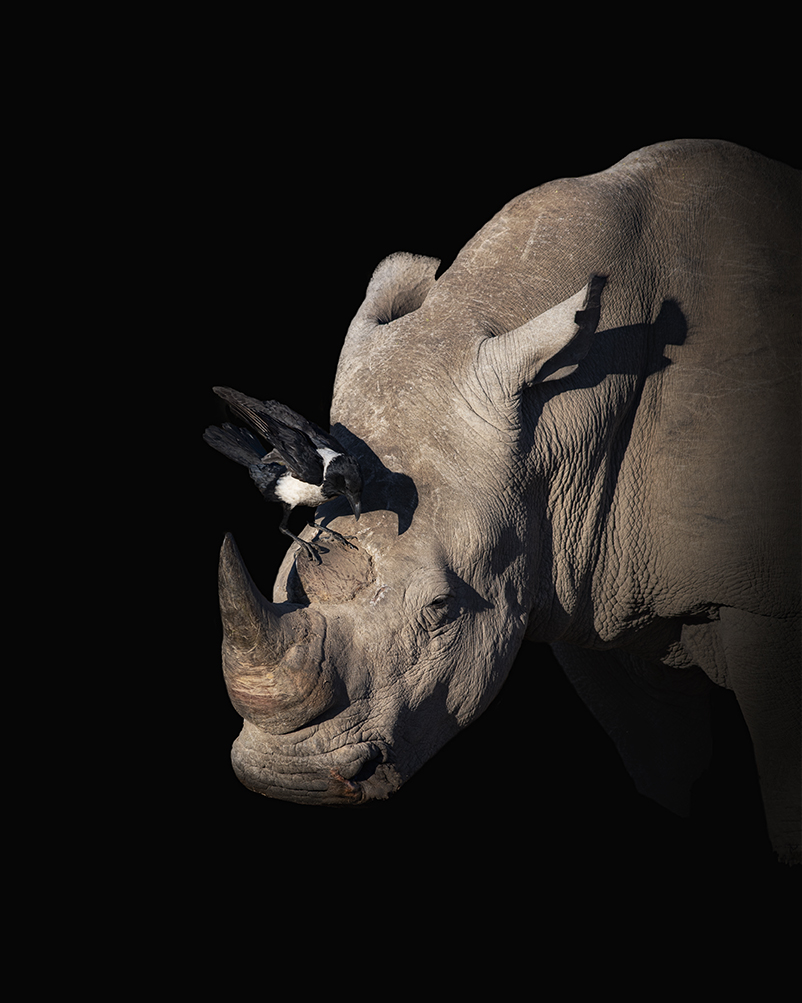
A huge bull elephant comes for a drink at a waterhole in Madikwe Game Reserve. Male elephants are generally solitary creatures, although friendships between groups of males have also been documented.
For one month of the year, bull elephants go into the condition of musth. During this time the bull produces 40 to 60 times more testosterone than usual. It makes him aggressive and unpredictable, and the best advice for other elephants and humans alike is to give the bull lots of space.
Musth is similar to what happens to Popeye when he downs a can op spinach. In musth, a male that is way down the ladder can challenge a dominant bull and win. When a bull elephant has broken tusks like this one, it may well be the result of a fight with another elephant!

Leopard stare

From three months old, leopard cubs start to accompany their mother on the hunt. This one, though, was left to fend for itself during the day while his mother was… what? Hunting? Going to work? Shopping? I don’t know. At the end of the day he grew restless and tried his luck on some guinea fowls, who laughed at his attempts to catch them. There are a lot of skills a young leopard has to learn. They often do not leave their mothers until they are a year or a year and a half old. Some may even stay for longer than that.