
A group of impalas all looking in the same direction. We do too. Every now and then one snorts. We try to see what they are seeing, hearing or smelling. Then they all turn and run away. Something must have been there … but unfortunately in the thick bush we were unable to find out what. Another “invisible leopard” sighting…
Tag: africa
Tree squirrel
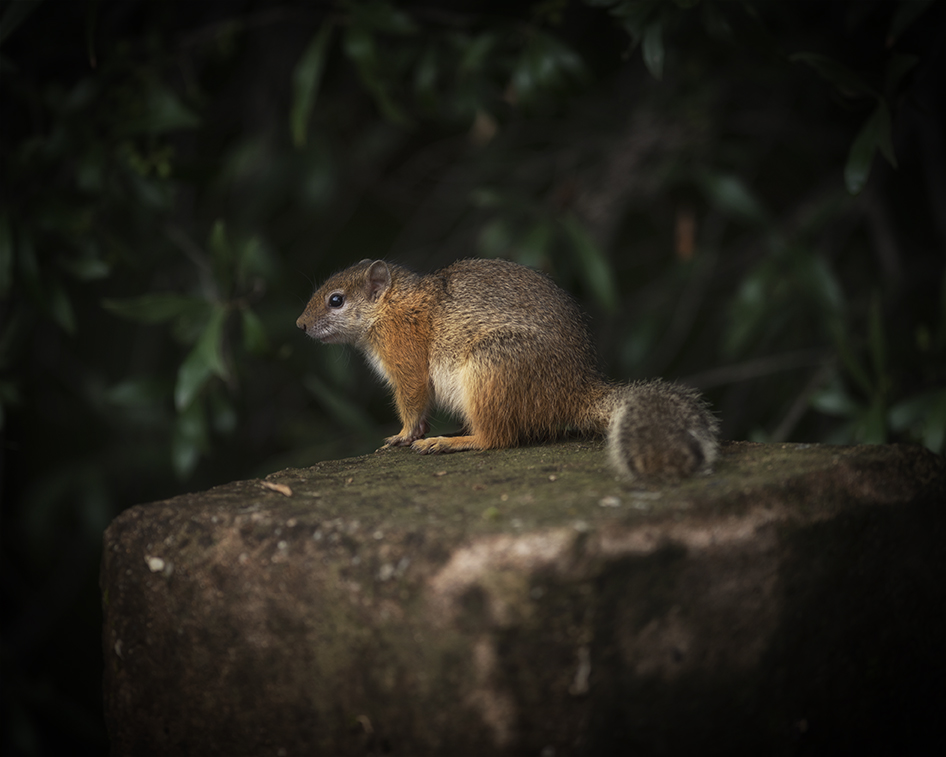
Safari guides are generally not very impressed if we spot a tree squirrel. But we happen to like these cute animals. So even though we had hoped to find a leopard hiding under this bridge, we were happy to see the squirrel instead!
Citrus swallowtail
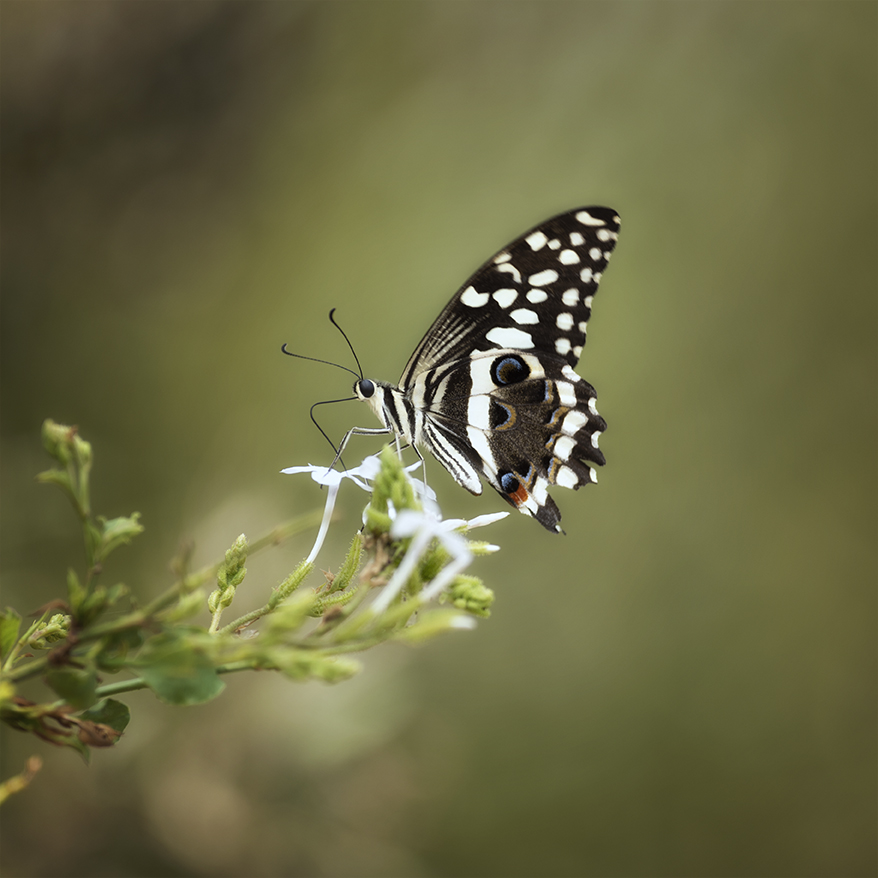
A last remembrance of summer before we head into winter territory…
Black-backed jackal
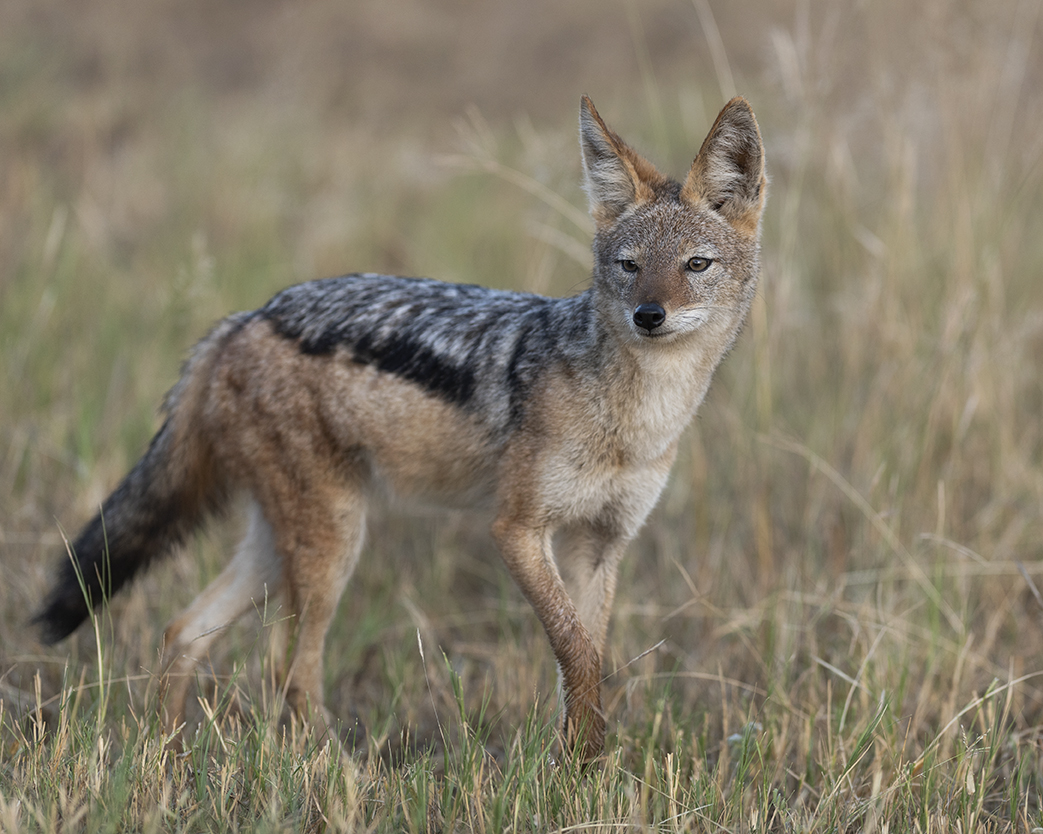
A black-backed jackal hunting early in the morning in Pilanesberg National Park.
We hadn’t seen much this morning, and my stomach was grumbling, so we decided to just park the car and have some breakfast while we were watching a group of impalas. Suddenly, a little further afield, I saw movement. It was this little jackal, who kindly moved into the direction of our car so that I could get a good shot!
Leopard

Photographing a leopard in the zoo is a different challenge than finding a leopard in the wild. No adrenaline rush here! But the lightning conditions can be challenging – for this image I set an ISO of 1600, so there is quite a bit of noise when you zoom in. I love it though!
Kudu bull
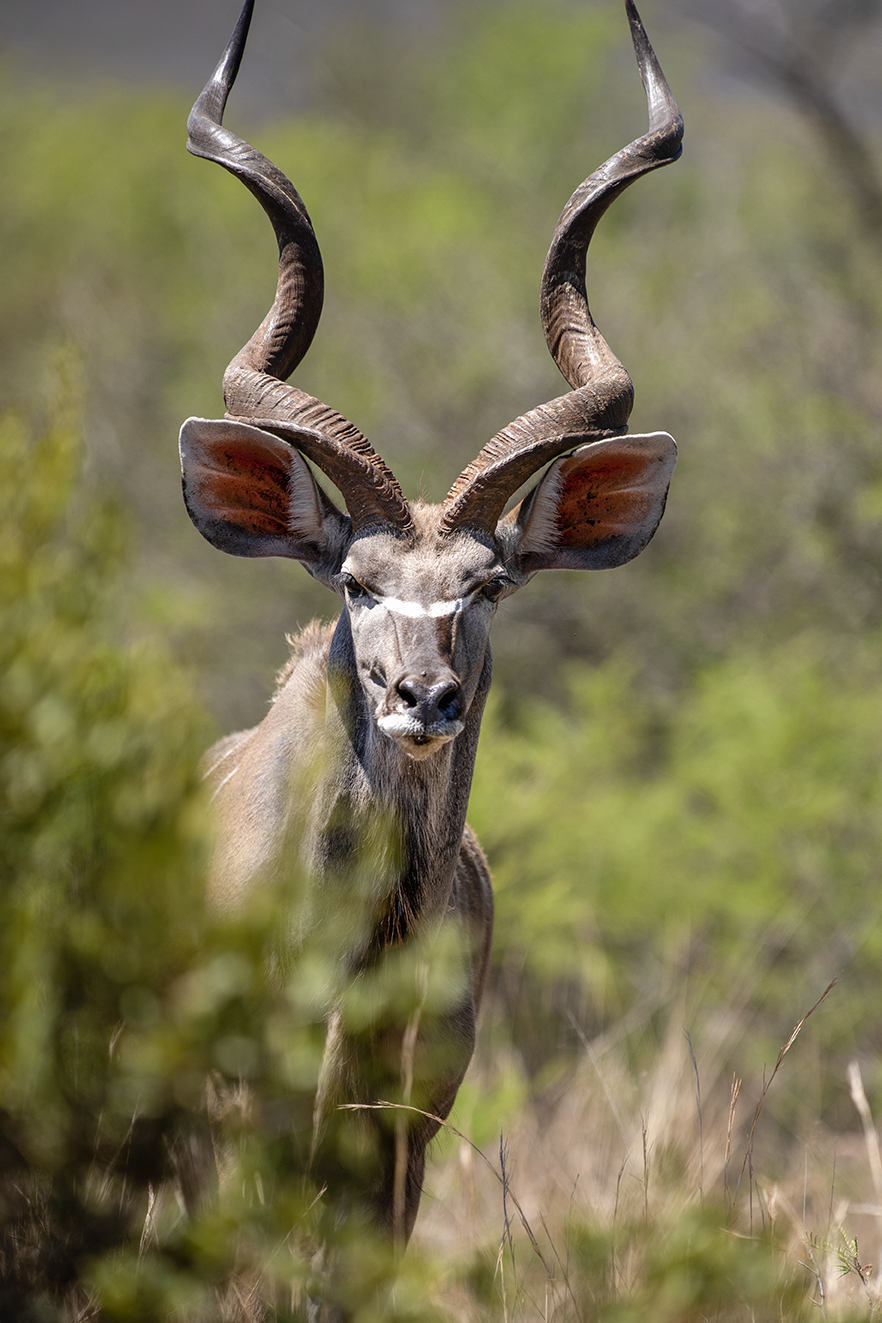
A beautiful male kudu appearing from the bush. Look at those horns! This male is one of a bachelor group of six big bulls in Pilanesberg National Park.
Brown hyena marking its territory
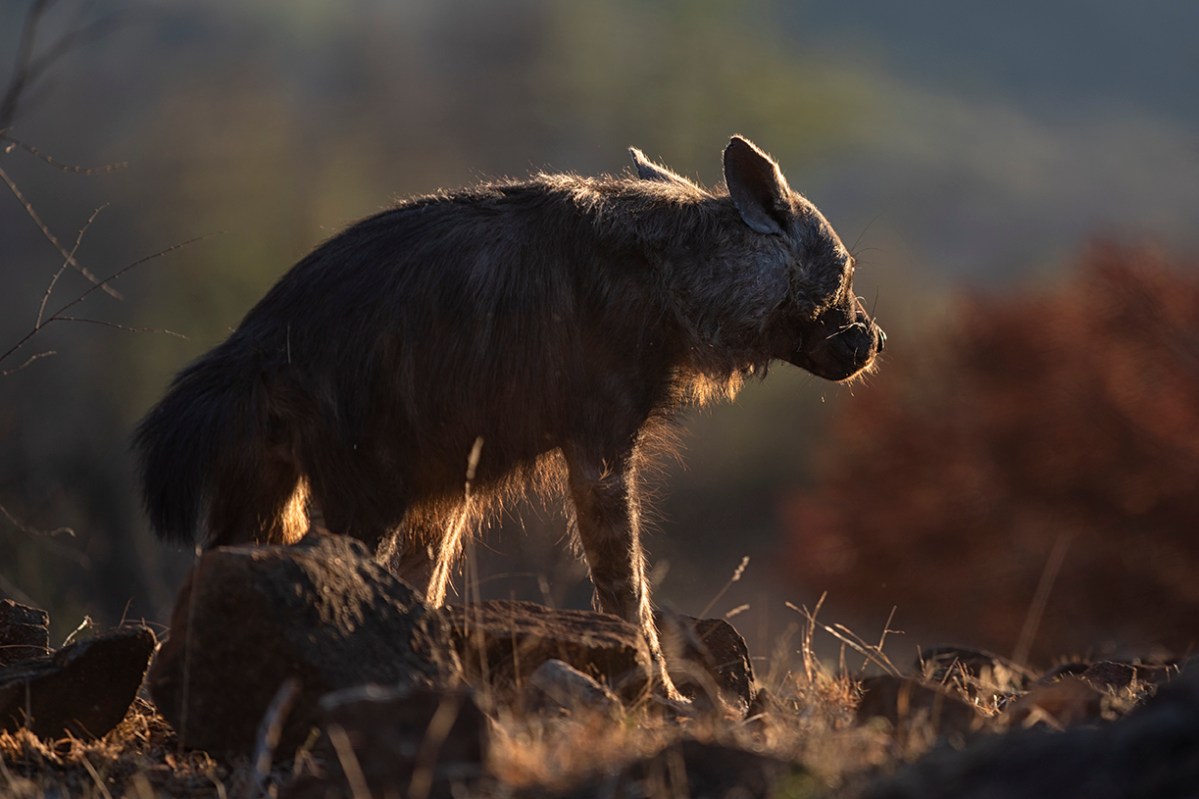
If there’s one word for the brown hyena it must be shaggy. The brown hyena has a longer coat than the better known spotted or striped hyenas. This, however, doesn’t make it a glamorous animal. Rather, his coat looks mangy and moth eaten. Brown hyenas are mainly scavengers, crushing even the bones of carcasses that other predators leave behind. The animal in the picture is marking its territory with a white and a black paste. Research has shown that the white paste is a general boundary marker for other hyenas: this is my territory. The black paste communicates to members of the same clan that this area is already searched for food; the smell of this paste fades after a few days.
Photo taken in Pilanesberg National Park
Maximus in black and white

Maximus is one of the big male leopards in Pilanesberg National Park. In general, male leopards are larger and more muscular than the females. They live alone, seeking the company of females only in the mating season. Male leopards are known to fight with other males who intrude in their territory. Females are less aggressive towards other leopards, and their territories are smaller.
Baby zebra grazing
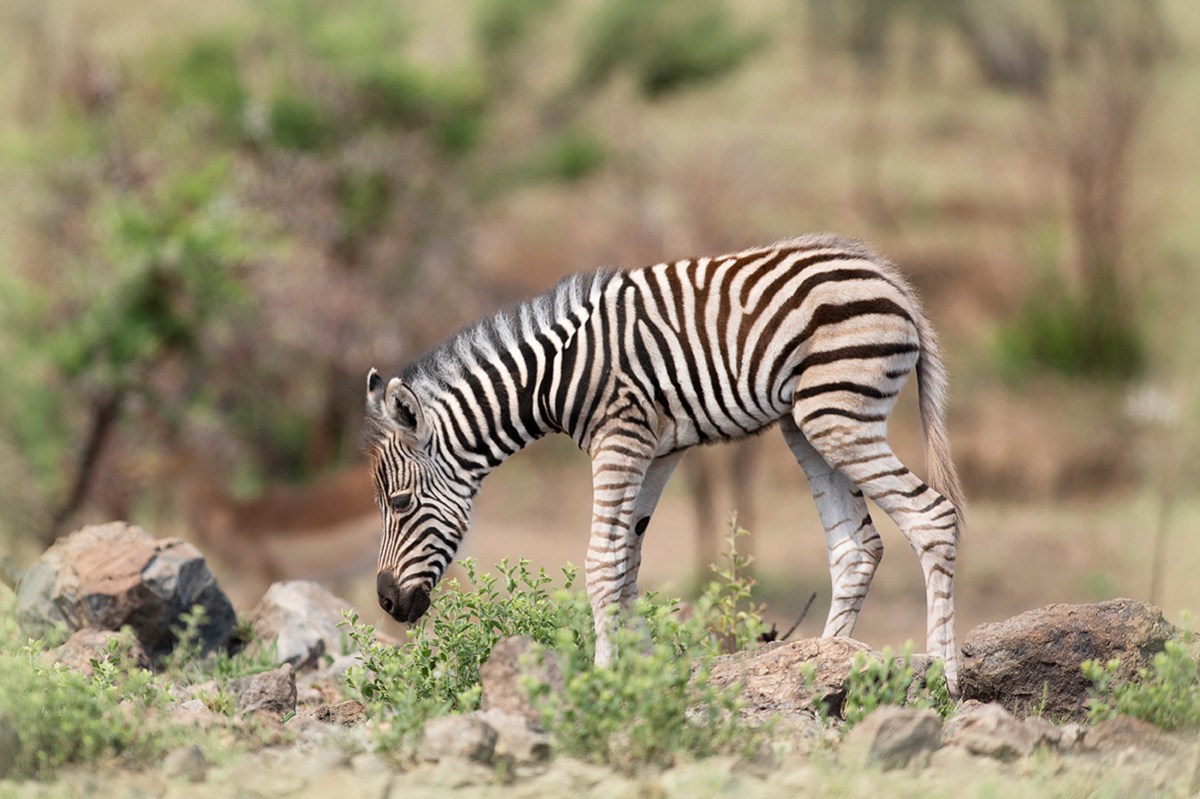
A small baby zebra is gingerly tasting the green shoots between the rocks on the ground. Zebras are born after thirteen months of gestation. They start nibbling on grass within a few weeks from birth. The coat of a baby zebra is more brownish than the clean black and white of the adult. It is also adorably fluffy!
Photo taken in Pilanesberg National Park
 Awesome wonder