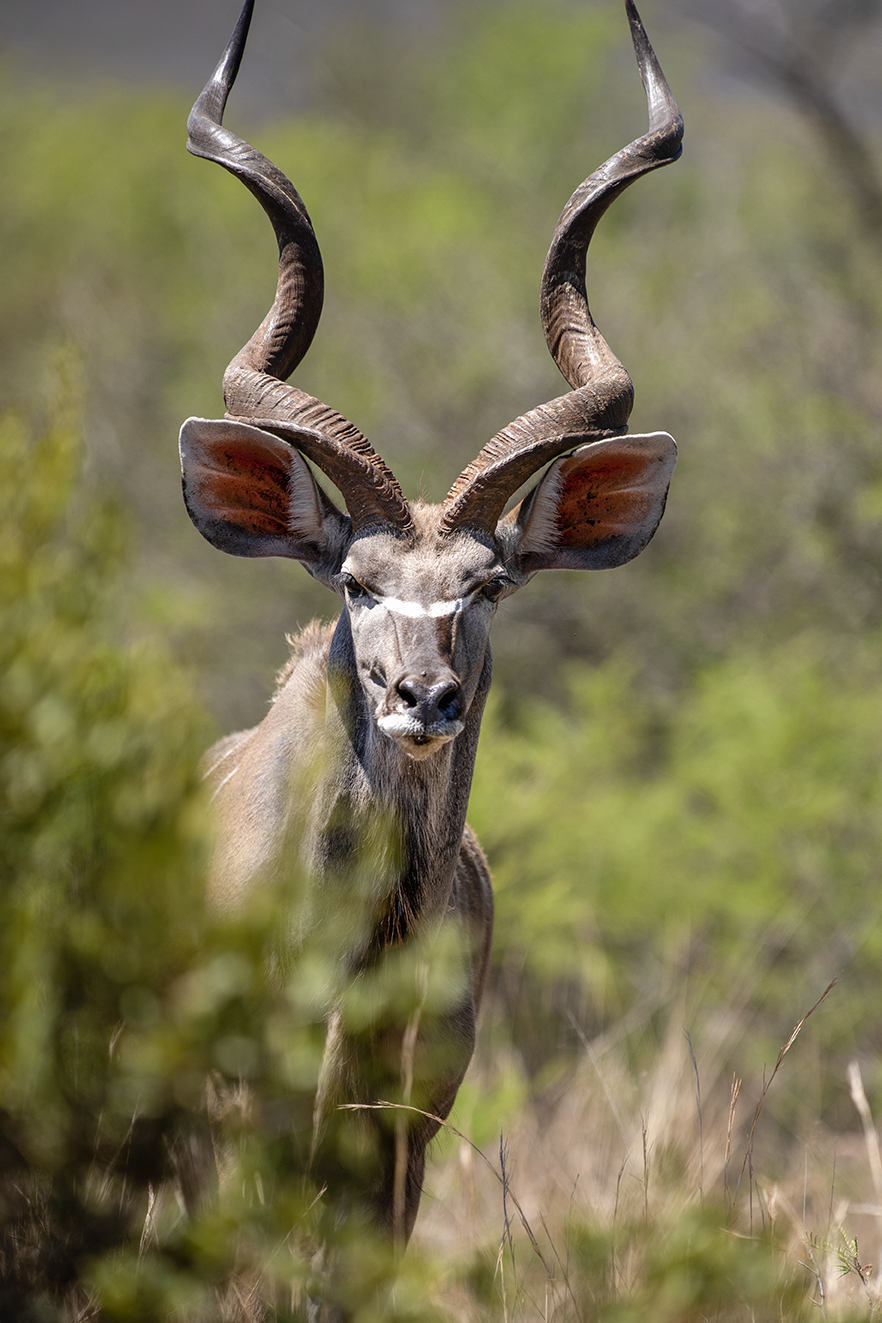
A beautiful male kudu appearing from the bush. Look at those horns! This male is one of a bachelor group of six big bulls in Pilanesberg National Park.
Tag: wildlife
Brown hyena marking its territory
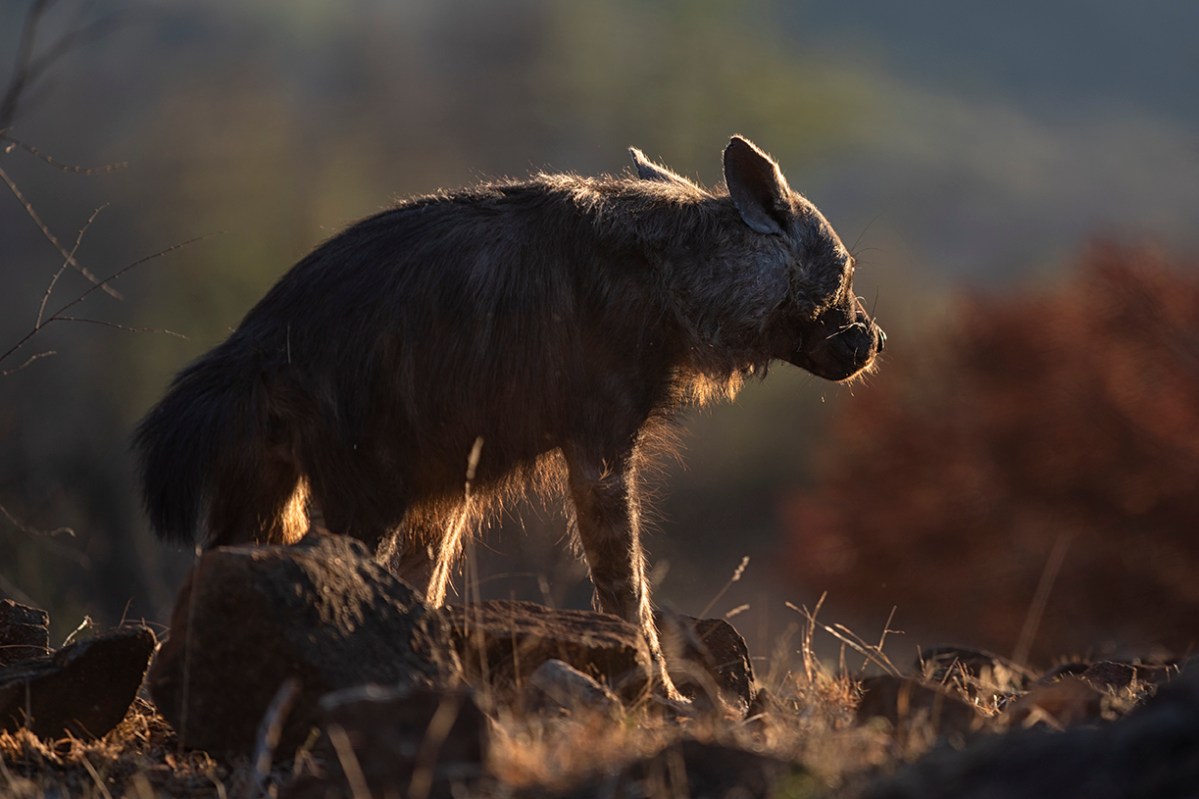
If there’s one word for the brown hyena it must be shaggy. The brown hyena has a longer coat than the better known spotted or striped hyenas. This, however, doesn’t make it a glamorous animal. Rather, his coat looks mangy and moth eaten. Brown hyenas are mainly scavengers, crushing even the bones of carcasses that other predators leave behind. The animal in the picture is marking its territory with a white and a black paste. Research has shown that the white paste is a general boundary marker for other hyenas: this is my territory. The black paste communicates to members of the same clan that this area is already searched for food; the smell of this paste fades after a few days.
Photo taken in Pilanesberg National Park
Giraffe
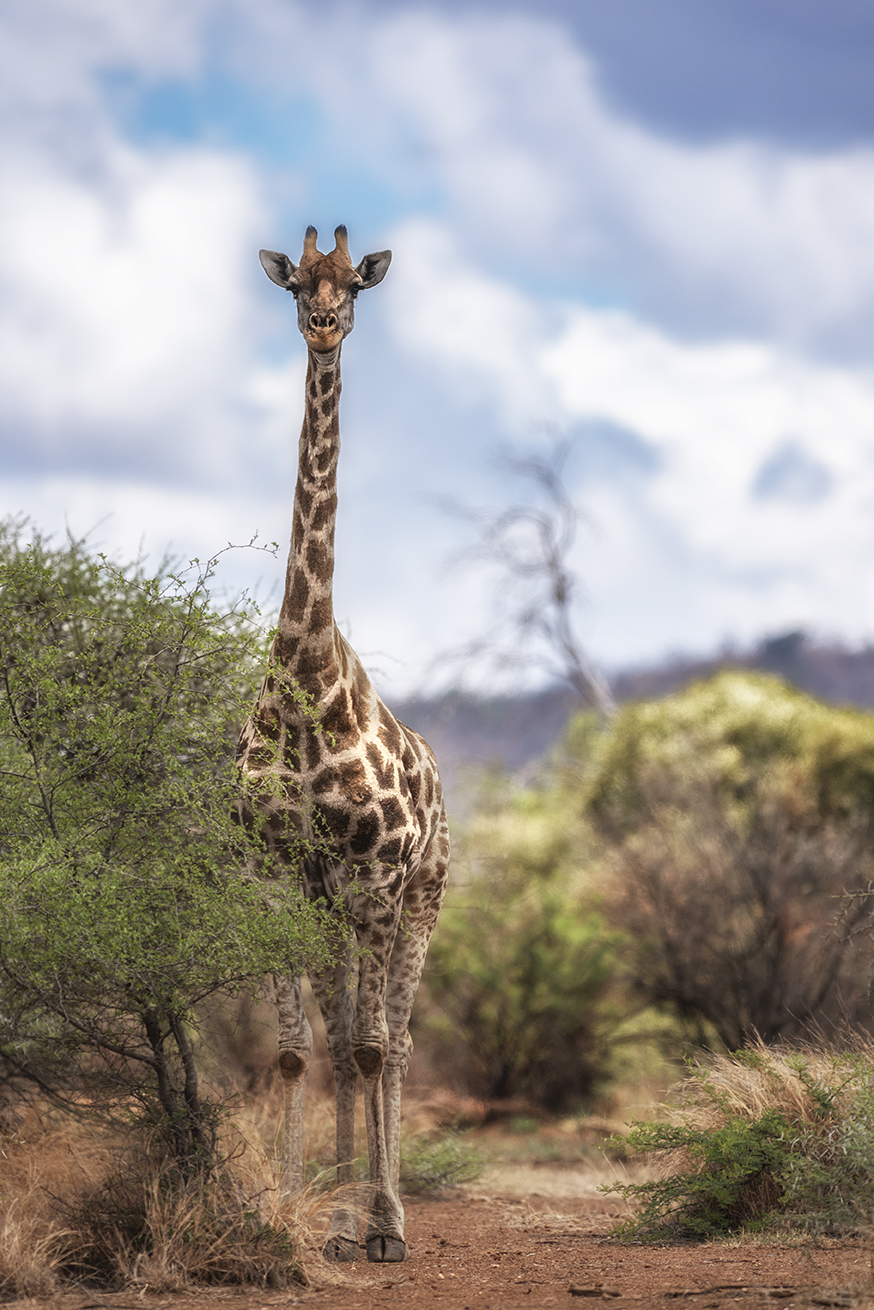
Giraffes are so tall they are actually quite hard to photograph with a telelens. Glad to have gotten some landscape in there with this one!
Photo taken in Pilanesberg National Park
Maximus in black and white

Maximus is one of the big male leopards in Pilanesberg National Park. In general, male leopards are larger and more muscular than the females. They live alone, seeking the company of females only in the mating season. Male leopards are known to fight with other males who intrude in their territory. Females are less aggressive towards other leopards, and their territories are smaller.
Baby zebra grazing
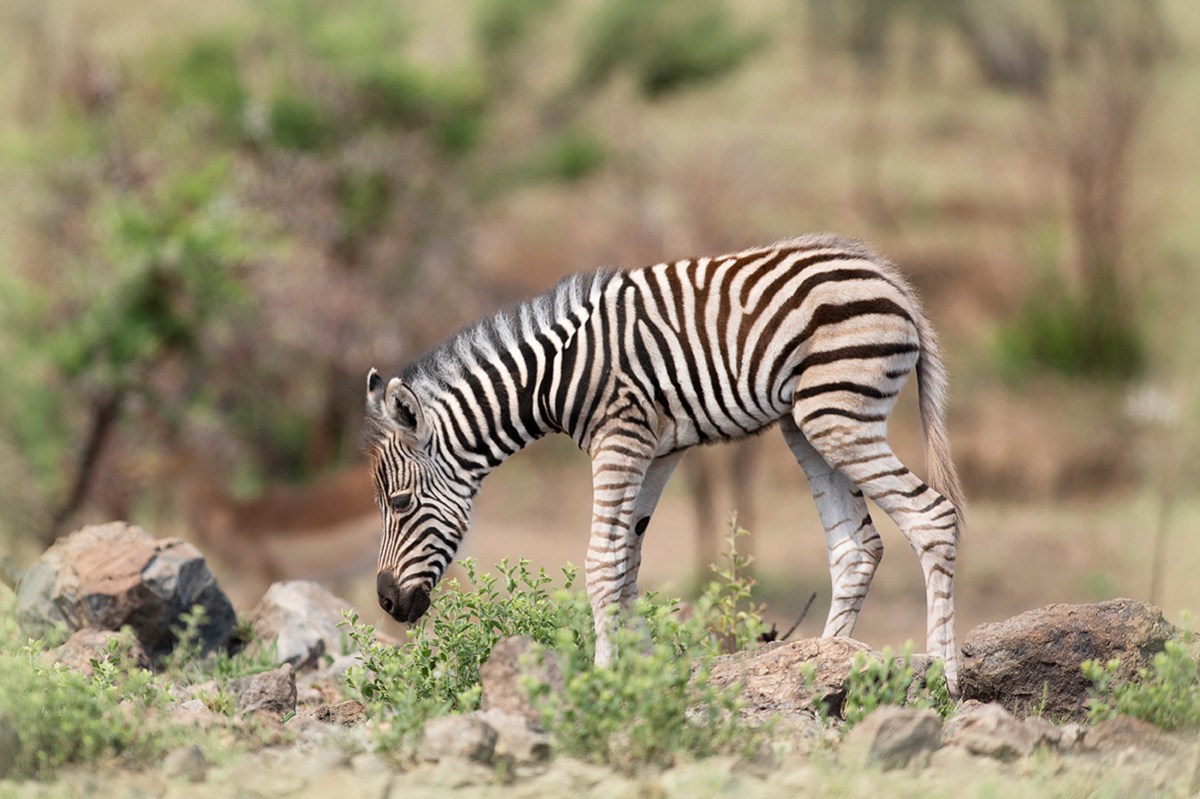
A small baby zebra is gingerly tasting the green shoots between the rocks on the ground. Zebras are born after thirteen months of gestation. They start nibbling on grass within a few weeks from birth. The coat of a baby zebra is more brownish than the clean black and white of the adult. It is also adorably fluffy!
Photo taken in Pilanesberg National Park
Don’t look back in anger
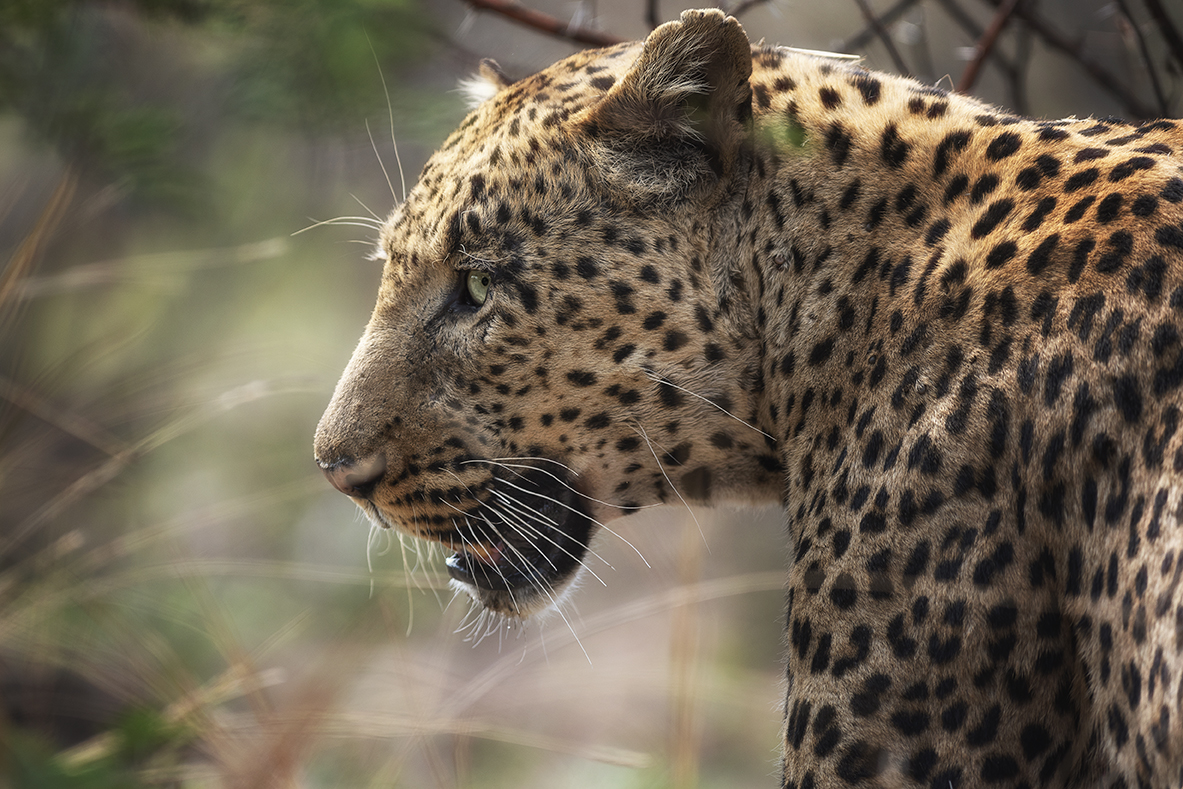
As he walked away from our attention, the leopard threw one last look at us over his shoulder. These sightings are always too short!
Photo taken in Pilanesberg National Park.
Beautiful male leopard
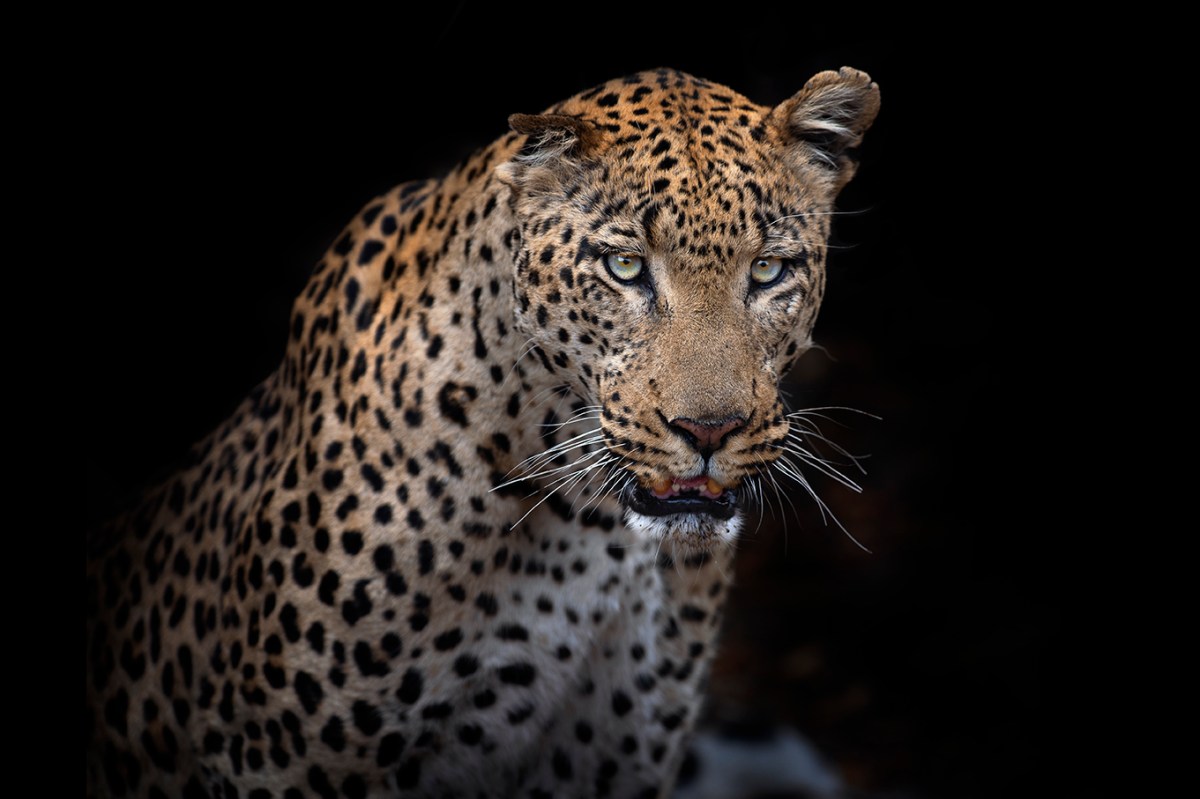
That moment when you drive over a bridge and look down into the eyes of a big male leopard… Pilanesberg hosts a good many leopard, but spotting them always seems to be a game of chance. I can tell you my hands shake every time I meet one of these magnificent creatures!
Photo taken in Pilanesberg National Park
Baby rhino

An adorable baby rhino resting in the shade. Rhinos spend their days and nights grazing, only resting during the hottest hours of the day. After birth, a baby rhino can walk within an hour. A rhino is born without a horn, but the front horn becomes visible within one or two months. The back horn starts growing when the calf is about a year old. The calf will stay with its mother for about three years before setting off on its own.
Sunset zebra

A zebra grazing on a newly green field at sunset, while the burnt hills in the background are colored by a purple haze. This picture just makes me want to pack up and travel into the wild again!
 Awesome wonder